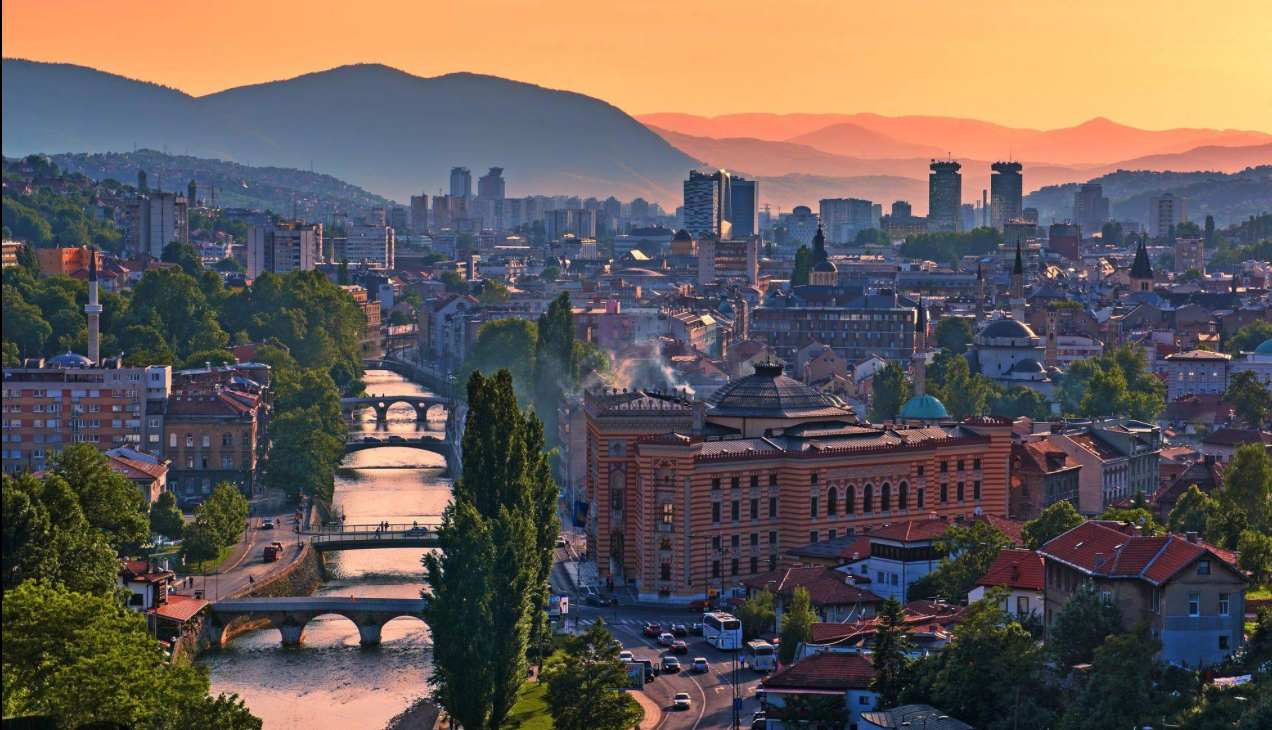
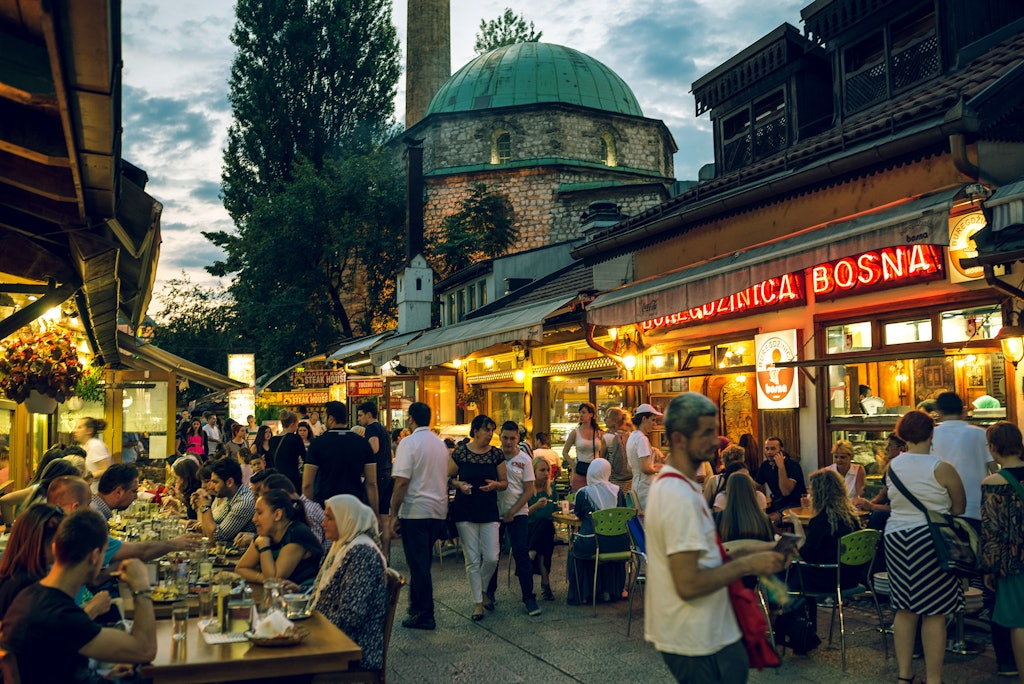
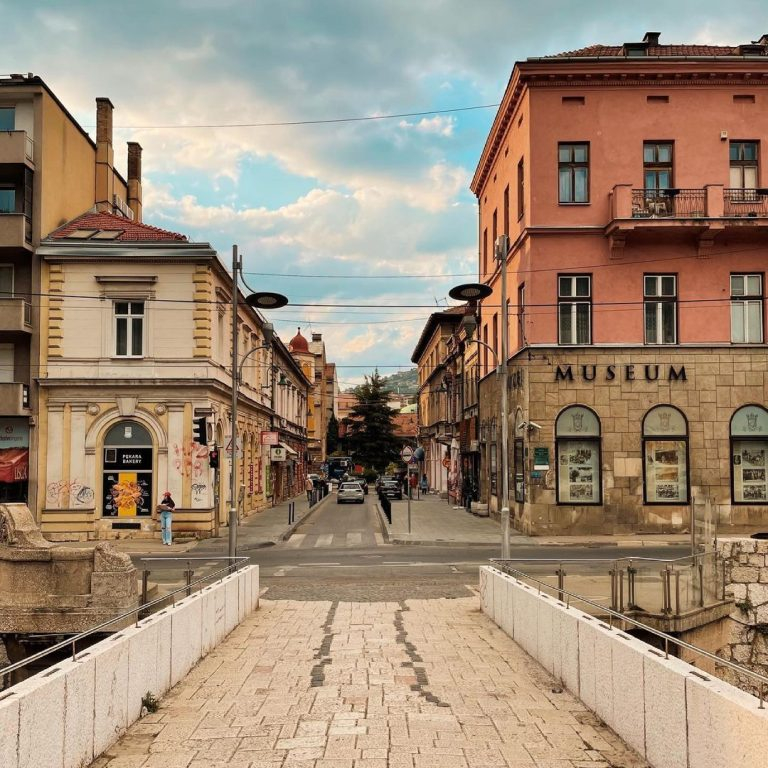
Ringed by mountains, Sarajevo is a singular city with an atmosphere all of its own – meander around the Ottoman quarter of Baščaršija and savour the smoking barbecue restaurants and local coffee, peek into the mosques, churches and synagogues, and marvel at the dilapidating socialist architecture, before joining the locals in the lively and stylish bars and restaurants.
Once renowned as ‘the Jerusalem of Europe’ for its religious diversity, Sarajevo is now majority Bosniak, with most of the Orthodox Christians living in newly built Istočno Sarajevo (East Sarajevo) on the Republika Srpska side. The 20th century thrust Sarajevo into the world’s consciousness via the assassination which precipitated WWI, the 1984 Winter Olympics, and sadly, by the brutal almost-four-year siege of the city in the 1990s.
Sarajevo is once again a wonderful place to visit – war scars visible as they are. Enjoy its intriguing architectural medley, vibrant street life and irrepressible spirit.
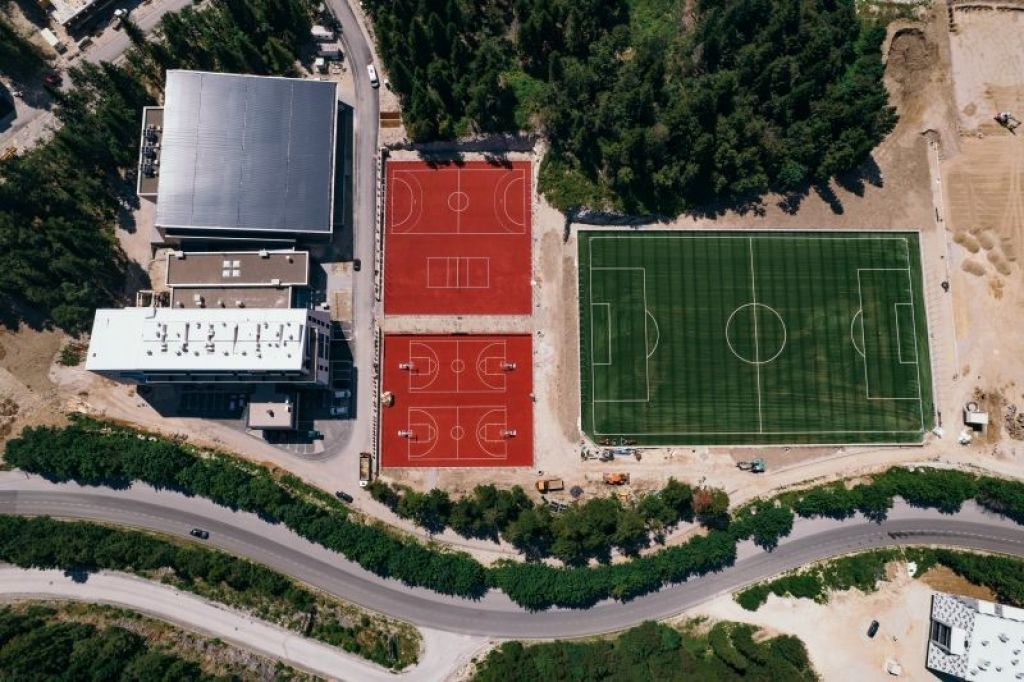
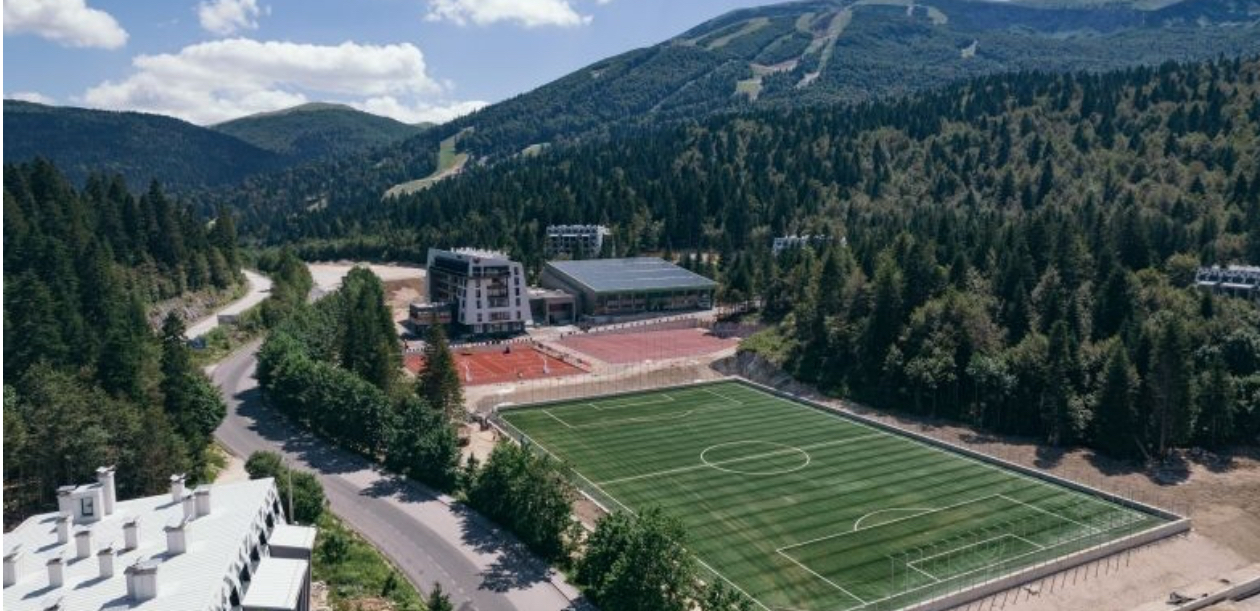
You will love peace and closeness to nature, you can ski and hike from it in a couple of minutes on foot, and with car you are 10 minute drive from the center of the city. Place has free parking and all the amenities that you need for a stay here.
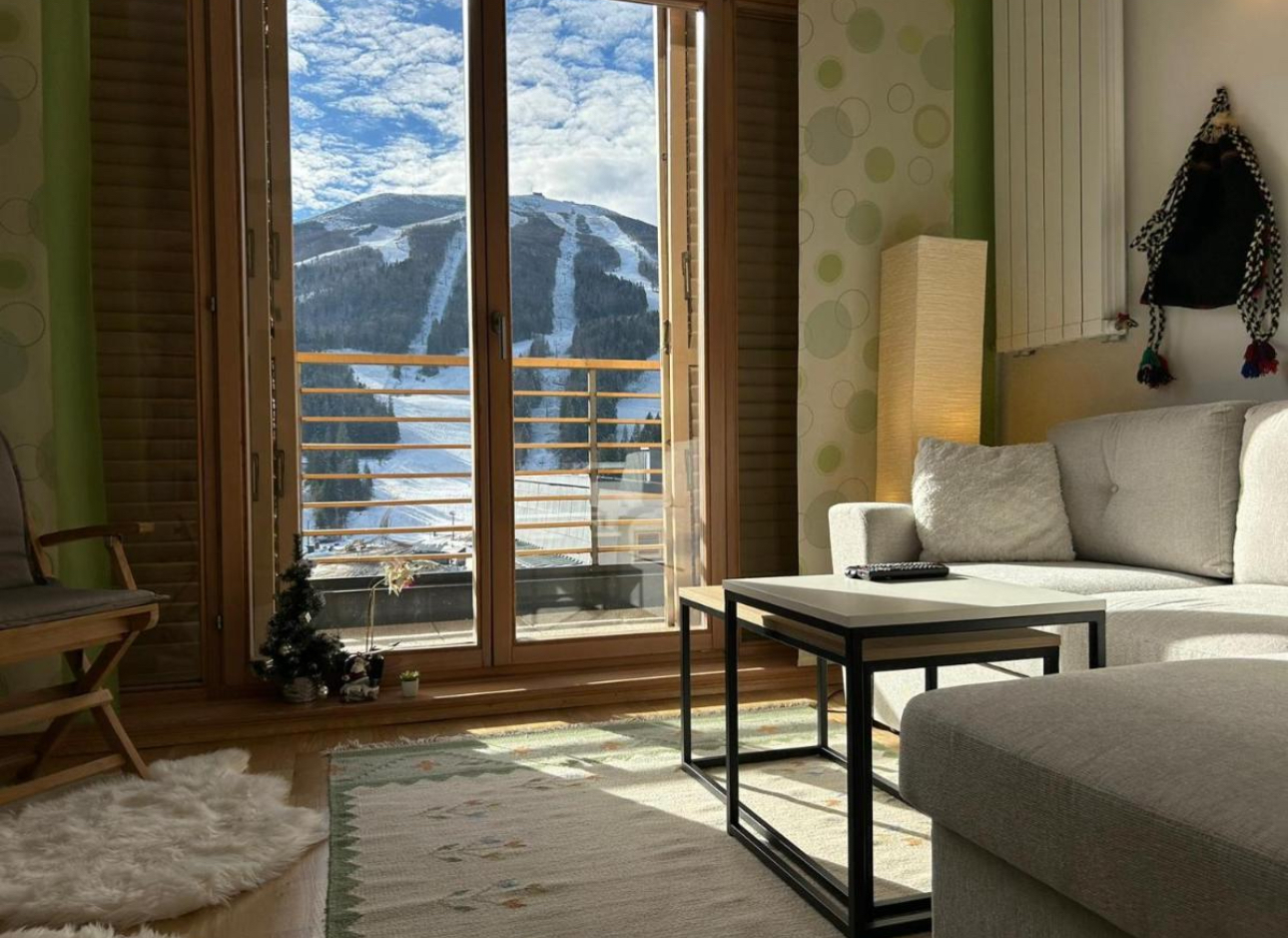
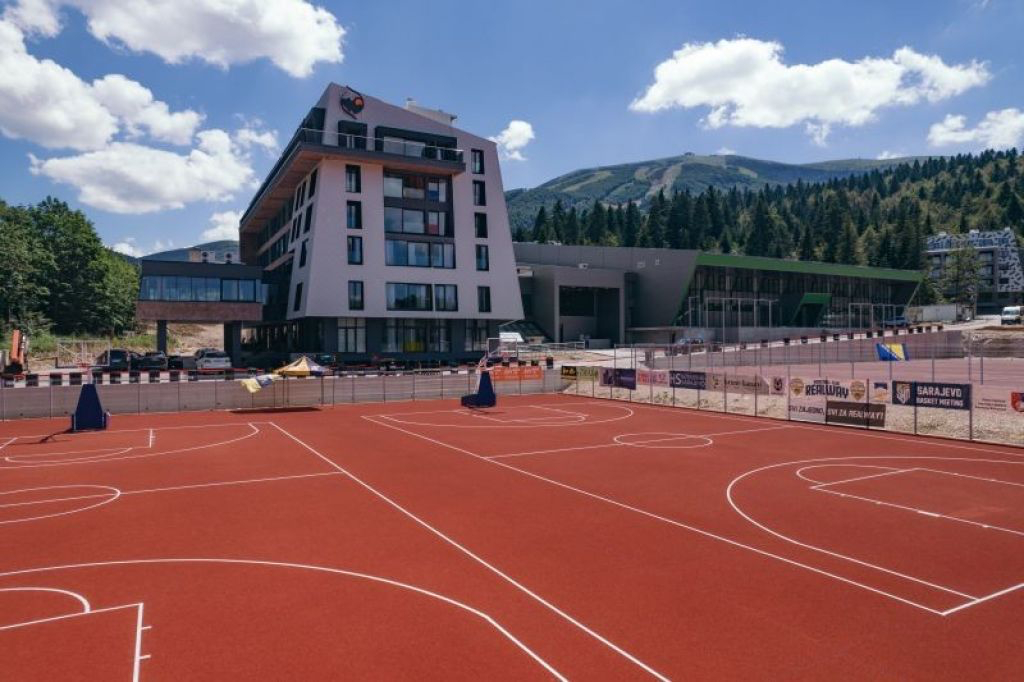
My apt is near the olympic mountain where you are right in the foothill of ski centre, has beautiful view on nearby forest and mountain, and you are just a few minutes walking to nearby market, local coffee shops and restaurants.
The Space
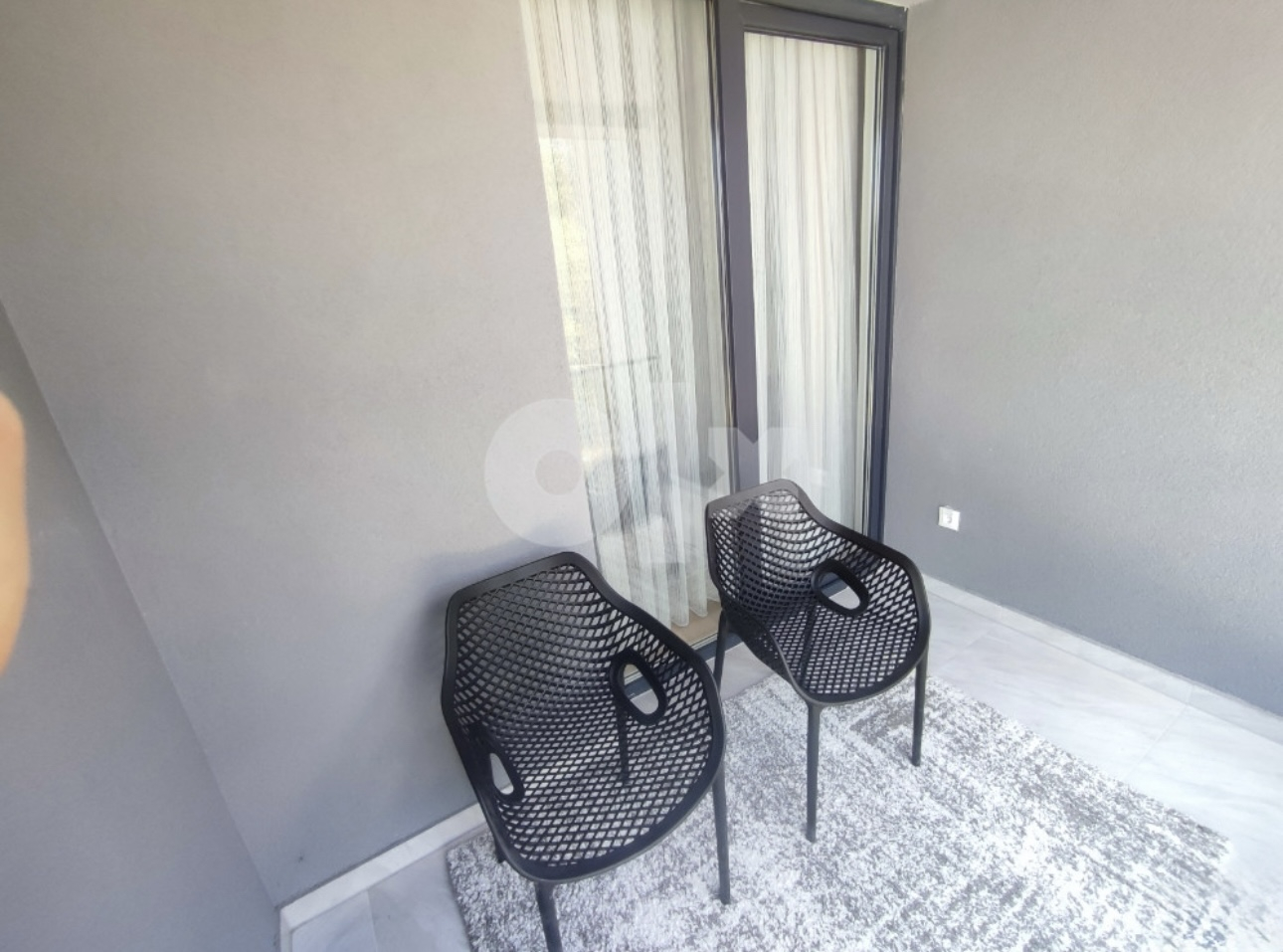
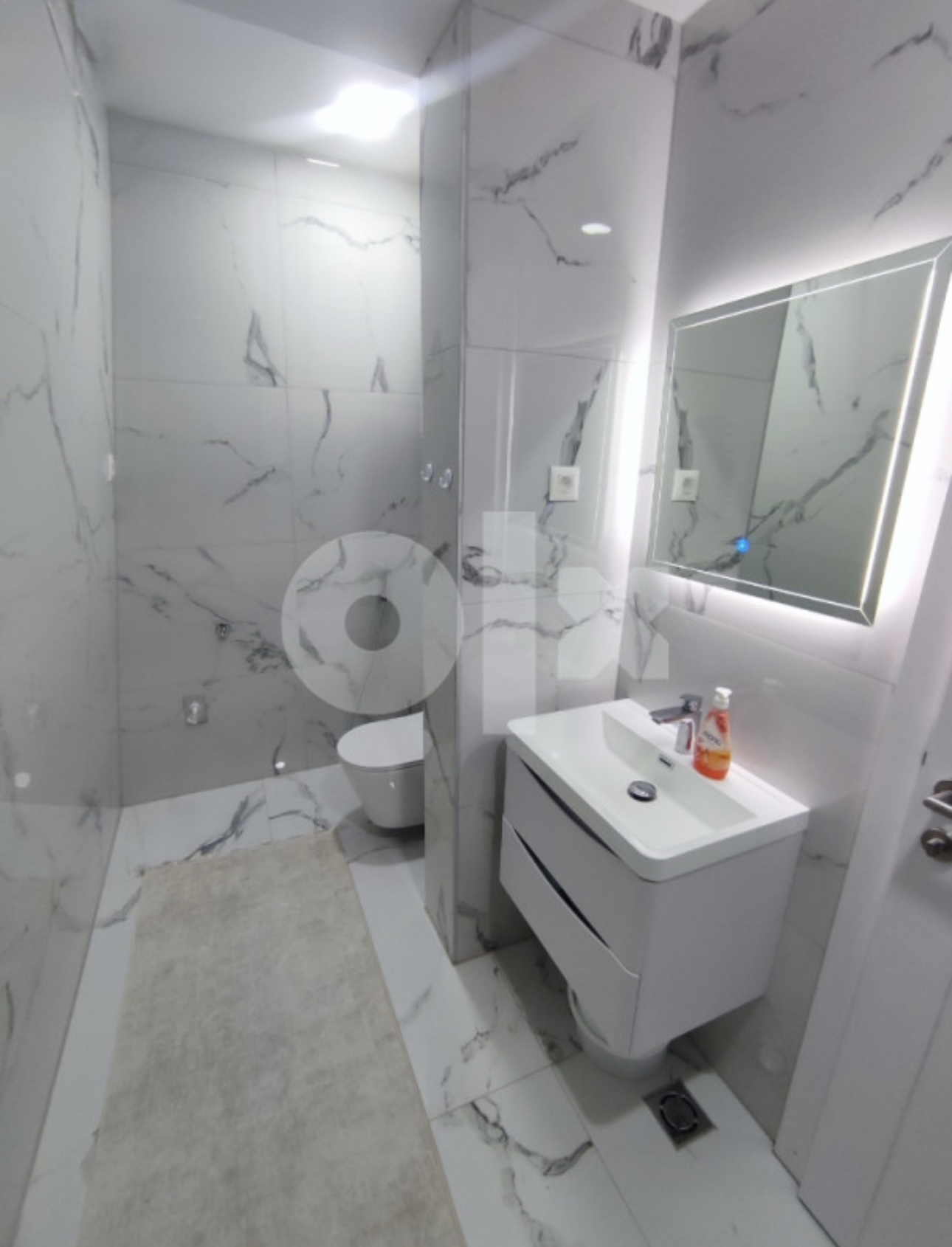
The space has one bedroom, living room with a couch that can be used for sleeping also, kitchen and bathroom and balcony with lovely view on a nearby forest and mountains. It has free parking space, lift, and is on a second floor, it is near local restaurants and markets.
Guest Access
The apt is on a second floor in building with a lift and it has free parking space.
Features
Fridge
WiFi
Bed sheets
Oven
Towels
Washer
TV
Heating
Hair dryer
Microwave
Iron
Dishwasher
Smoke alarms
Workspace
Clothes dryer
Coffee machine
High Speed Internet
Garden / yard
Bathtub
Air conditioning
Deck / patio / courtyard / terrace
BBQ
First aid kit
Fire extinguisher
Balcony
Fireplace
Toys
Covered porch / verandah
Bikes
Pool
Gym
Wheelchair accessible
Home cinema
Hot tub
Gated community
EV Home Charger
Standup paddleboard
Camping gear
Kayak
Sauna
Tennis court
Meat-free kitchen
Kosher home
Piano
Travel Styles
Weekend
Adventure
Family
Romantic
Foodie
Relaxing
City
Village
Mountains
Skiing
Hiking
House Rules
Suitable for infants under 2
Suitable for children ages 2-12
Pets not allowed
No smoking
Dates of Availability
Click on availability periods to see exchange types and descriptions.
Neighbourhood
My place is located on a olympic mountain in a foothill of a ski centre and forest and lots of hiking options around.
Bjelasnica and Igman mountains are very popular winter resorts located only 25 km from Sarajevo.These two mountains were the host of the 14th Winter Olympic Games in 1984, featuring Alpine and Nordic skiing and ski jumping competitions.
The mountain range stretches over 300 kilometers and features the mixture of the Mediterranean and Continental climate. Bjelasnica is thus known to have all four seasons in a single day. The Meteorological Observatory was built at the mountain’s top in 1984.
Bjelasnica and Igman are covered in a thick snow cover (135 cm) for approximately 200 days a year. The mountains have around 25 kilometers of very good skiing trails, hotel accommodation and other amenities. Bjelasnica’s skiing slopes start at the highest peak (2067 meters) and finish at Babin do (1266 meters).
City centre is a 10 minute drive but i can offer you also stay in city for free if you would like that where i have my primary residence. Sarajevo has rich cultural and historic monuments and some of them are:
Old Town
Bascarsija and Sebilj Fountain
Bascarsija (tur. – the main market) was established in the 15th century by Isa-Bey Ishakovic, the founder of Sarajevo, and Ghazi Husrev-Bey who left an exquisite endowment as a legacy to the city.
In addition to these two benefactors, some other regents and wealthy merchants contributed with their donations.
With rise of the Empire, the city progresses as well. Thus, Bascarsija was finished by the end of the 16th century, and the city soon after witnessed its golden age. Along with Istanbul, Thessaloniki, Edirne and Athens, it became one of the 5 largest cities in the Balkans, the city of trading and wealthy and powerful community.
The square spread into several trading and craftsmen alleys, it comprised 45 markets and over 80 crafts. Tiny cobbled alleys intertwined and spread towards mosques, inns, bedestans, hamams, schools and tekkes, fountains, caravanserai…
The first water supply system was built in the mid 15th century, and significantly extended in the 16th century. By the end of the Ottoman period, there were 156 spouts and several stone fountains built mainly as an endowment.
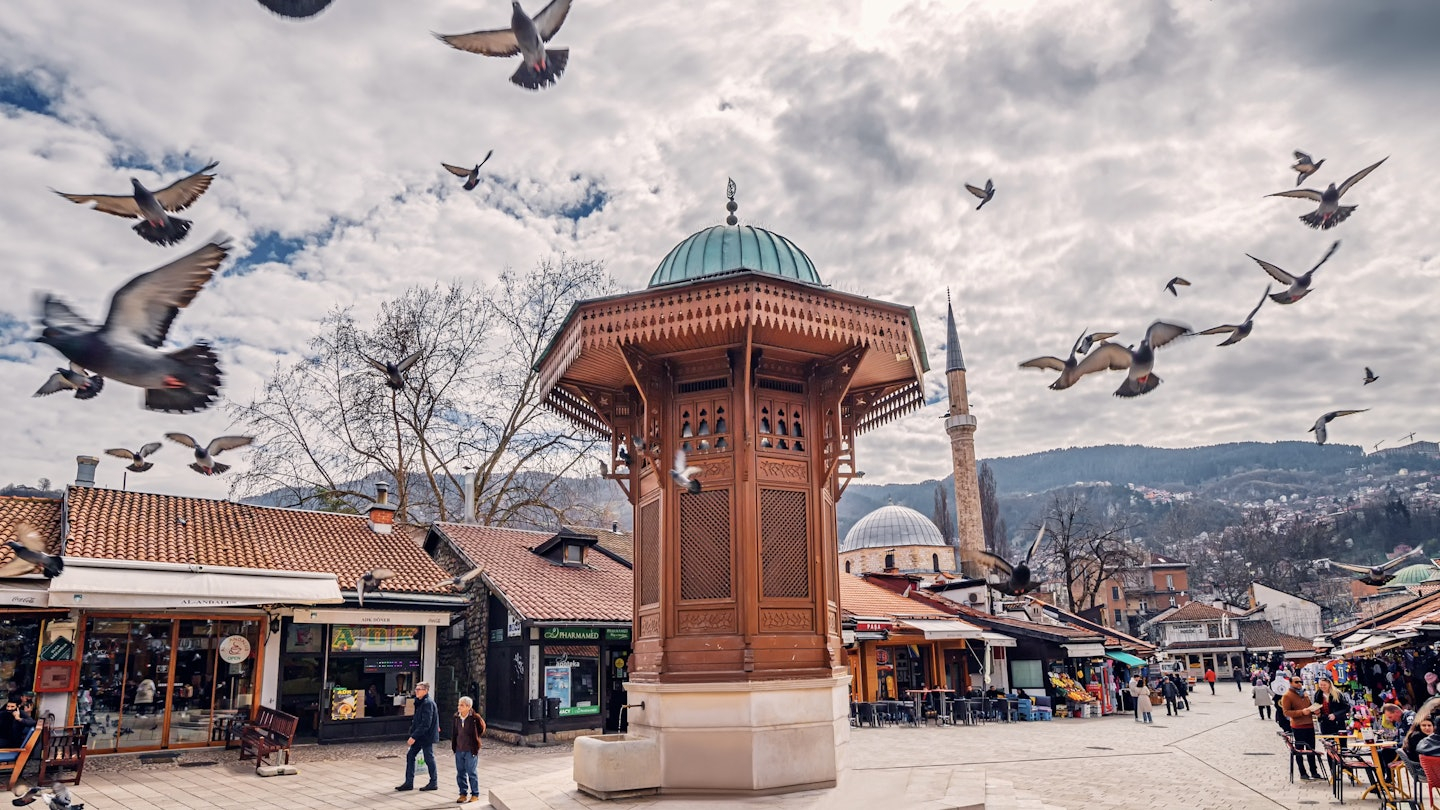
Sebilj Fountain is a symbol of Sarajevo. A legend says: “Whoever drinks water from any of Sarajevo’s fountains and spouts will come to Sarajevo”. The Sebilj Fountain was built in 1753.
Atmospheric alleys and architecture in Baščaršija
Centred on Sebilj fountain, Baščaršija (pronounced barsh-char-shi-ya) is the very heart of old Sarajevo. The name is derived from the Turkish for ‘main market’ and it’s still lined with stalls, a lively (if tourist-centric) coppersmith alley, grand Ottoman mosques, caravanserai (inn) restaurants and lots of inviting little cafes. The east–west lane, Sarači, broadens out into the wide pedestrian boulevard Ferhadija, where Austro-Hungarian–era buildings take over. Some particularly grand examples line the waterfront.
Starting right there, the storybook neo-Moorish striped facade makes the triangular City Hall (Vijećnica, 1896) Sarajevo’s most beautiful Austro-Hungarian–era building. Seriously damaged during the 1990s siege, it reopened in 2014 after laborious reconstruction. Its colourfully restored interior and stained-glass ceiling are superb. Your ticket also allows you to peruse the excellent Sarajevo 1914–2014 exhibition in the octagonal basement. This gives well-explained potted histories of the city’s various 20th-century periods and insights into fashion and music subcultures.
In 1914 Franz Ferdinand and his much frowned-upon wife Sophie (she had been his mother’s former lady-in-waiting) were on their way back from this very building when they were shot by Gavrilo Princip, a member of Young Bosnia, a secret group resisting the Austro-Hungarian rule. From 1949 the building became the National Library but in August 1992 it was deliberately hit by a Serbian incendiary shell. Around two million irreplaceable manuscripts, books and documents were destroyed. Those that survived might one day return, but for now the building is used as the council chamber, for events and occasionally for concerts. Various exhibitions are staged in the upper level and an International Criminal Tribunal for the former Yugoslavia (ICTY) information centre sits on the ground floor, including the contents of the original courtroom, which were shifted here from the Hague.
The Museum of Crimes Against Humanity and Genocide 1992–1995 covers the many atrocities of the 1990s war in unsparing visual detail. Video footage combined with photographs, artefacts and personal testimonies illustrates the horror and brutality of the times. We wouldn’t recommend bringing children
.
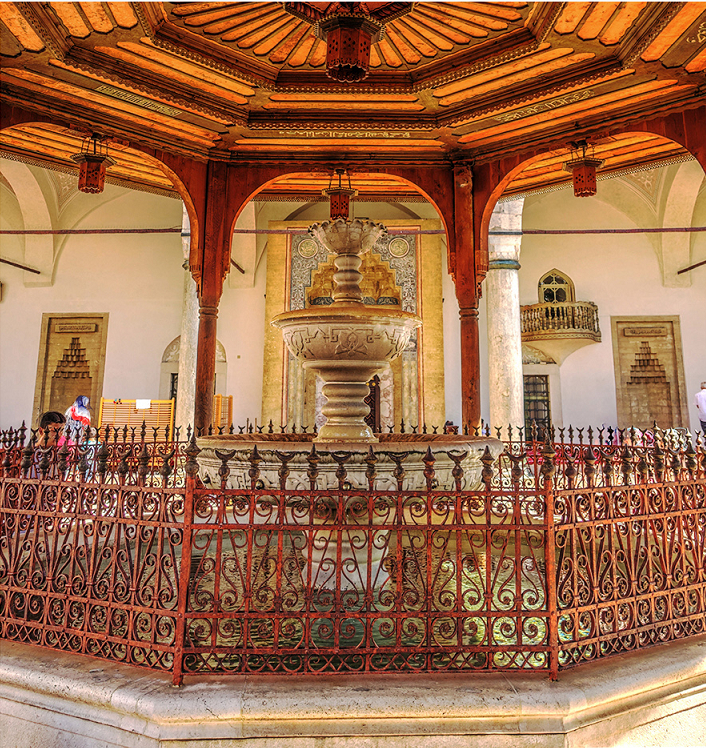
Bosnia’s second Ottoman governor, Gazi Husrev-beg, funded a series of splendid 16th-century buildings, of which the 1531 Gazi Husrev-beg Mosque, with its 45m minaret, is the greatest. The domed interior is beautifully proportioned and even if you can’t look inside, it’s worth walking through the courtyard with its lovely fountain, chestnut trees and the turbe (tomb) of its founder.
If you’d like to learn more about the colourful life and philanthropic legacy of Husrev-beg, visit the Gazi Husrev-beg Museum. It is situated inside the 1537 Kuršumlija Madrasa building, distinctive for its pointed chimneys and the lead roof from which it takes its name. There’s little in the way of artefacts but the video is well worth watching.
Brusa Bezistan was built in 1551 as a silk-trading bazaar, and it is an elegant two-storey building topped with six green-metal domes and encircled by shops. It’s now a branch of the Museum of Sarajevo, providing an overview of the city from prehistoric times up until 1914. At its centre is a scale model of Sarajevo as it looked in 1878. The only concession to recent history is a series of grisly large-scale photographs of the mass-grave excavations from the 1990s genocide.
More religiously open-minded than most of Western Europe in its day, the Ottoman Empire offered refuge to the Sephardic Jews who had been exiled en masse from Spain in 1492. While conditions varied, Bosnian Jews mostly prospered until WWII, when most of the 14,000-strong community fled or were murdered. The community’s story is well told in the Jewish Museum, housed in a 1581 Sephardic synagogue that still sees active worship during Jewish New Year.
While the final form of the outwardly austere stone Old Orthodox Church dedicated to the archangels Michael and Gabriel dates to 1730, it was founded considerably earlier – possibly as long ago as the 5th century. Inside, under a star-spangled night-blue ceiling, is a superb gilded iconostasis from 1674 fronted by a pair of 3m-high candlesticks. The cloister museum displays manuscripts, vestments and icons, the oldest of which were painted in the 15th century.
City Hall
The need to construct a new building for the city administration came along with the Austro-Hungarian conquerors. The area of a medieval village (Brodac), where Isa-Bey’s Ishakovic established the city itself in the 15th cwas identified as ideal for the new government. The Austro-Hungarians bought off several buildings and two inns and designated Alexander Wittek as the main architect. He chose the pseudo-Moorish style for one of the most expensive projects in the Austro-Hungarian Empire at the time. Allegedly, Wittek was a perfectionist so he even projected the number of bricks that would be used to build the City Hall with a variation of only 3 bricks.
This grand architectural project was completed in 1896. Wittek did not live to see the completion. Due to his perfectionism, he could have not accepted the fact that the City Hall’s Auditorium did not have enough light. He considered this irreparable, had a nervous breakdown and committed suicide. Ciril M. Ivekovic took over the work, and found a simple solution and designed a glass-dome.
During the siege of Sarajevo, this cultural and historical monument was burnt down, along with the collections of the National and University Library (which was at the time seated within the City Hall). The City Hall was recently renovated (2014) and remains one of the most impressive attractions in Sarajevo. It is a symbol of education, hope, art, culture, history, beauty
Museum of Sarajevo Assassination and Latin Bridge
At the junction of the Apel key and Franjo Josip streets (today Obala Kulina bana and Zelenih beretki streets), Gavrilo Princip, a high school student and a member of Mlada Bosna, a secret organization established by the Black Hand movement completed the organization’s gloomy plan on June 28th, 1914. Gavrilo assassinated the Austro-Hungarian heir to the throne, Archduke Franz Ferdinand and his wife Sophie. The Austro-Hungarian Monarchy considered Serbia to be involved and sent their ultimatum on July 23, 1914. The First World War commenced soon after.
The Austro-Hungarian Monarchy set a monument dedicated to Franz Ferdinand and Sophie Hohenberg, just across the assassination spot, on Latin Bridge. The monument was removed when the Kingdom of Serbs, Croats and Slovenians was established. A year after removing the monument, a new museum “Museum of Sarajevo Assassination” was opened. The museum portrays the Austro-Hungarian rule, the new administration system, new way of living, crafts, economy, architecture, development of science and arts.
Monumental Complex ˝Tunnel of Salvation˝
The war tunnel was constructed during the 1425-day long siege Sarajevo (1992 to 1995 siege) to connect two free territories. The entrance and exit of the tunnel are two houses situated at the opposite sides of the airport.
Thus, the tunnel connected Dobrinja and Butmir settlements, and was named “Objekat D-B”. Tunnel construction was initiated in 1993 and completed the same year.
The tunnel is 720 meters long, 1.50 meters high. In 1994, narrow rails and mine carts were added to facilitate transportation of food and medicine.
Humanitarian aid was delivered through this tunnel, and wounded soldiers sent out of Sarajevo over Igman mountain. Politicians and world-known reporters such as Susan Sontag used this tunnel to come to Sarajevo and offer their support to the war-torn city. Today, this unique museum structure is one of the most popular tourist attractions in the city.
Sarajevo war sites
Start with the War Childhood Museum, an affecting place that had its genesis in a 2013 book edited by Jasminko Halilović, in which he asked a simple question of survivors of the Sarajevo siege: ‘What was a war childhood for you?’ Of the hundreds of replies received, 50 short written testimonies are presented here, each illustrated by personal effects donated by the writer, such as diaries, drawings, toys and ballet slippers. It’s a lighter, less gore-filled approach to the conflict than you’ll find elsewhere, but equally devastating.
Many of the works in the thought-provoking Ars Aevi contemporary art gallery were collected as donations for Bosnia during the 1990s conflict. The collection includes works by the likes of Anish Kapoor, Nan Goldin and Marina Abramović; a rotating selection of them is displayed in a factory-esque interior of metal ducts and polished chipboard within the lumpy Skenderija Centar.
Somewhat misleadingly named, the History Museum of Bosnia and Herzegovina, is a small yet engrossing museum. It occupies a striking, still partly war-damaged 1960s socialist-modernist building originally dubbed the Museum of the Revolution. It regularly hosts high-profile international exhibitions but the main attraction is the permanent Surrounded Sarajevo display, which charts local people’s life-and-death battles for survival between 1992 and 1995. Alongside some heartbreaking photographs are personal effects such as self-made lamps, examples of food aid, stacks of Monopoly-style 1990s dinars and a makeshift siege-time ‘home’. Also interesting is the collection of 1996–2011 before-and-after Sarajevo images in the hallway. Directly behind the building, the tongue-in-cheek Tito bar is a museum in its own right.
During the 1992–95 siege, when Sarajevo was surrounded by Bosnian Serb forces, the only link to the outside world was an 800m-long, 1m-wide, 1.6m-high tunnel between two houses on opposite sides of the airport runway. Walking through a 25m section, now called the Tunnel of Hope, is the moving culmination of a visit to the shell-pounded house that hid the western tunnel entrance. The story of the siege and the tunnel’s construction is told via video, information boards and an audioguide accessible via free wi-fi.
Although the airport was supposedly neutral and under tenuous UN control during the conflict, crossing it would have been suicidal. The solution was to secretly build the tunnel, which was eventually equipped with rails to transport food and arms. That proved just enough to keep Sarajevo supplied during nearly four years of siege.
Galerija 11/07/95 is a powerful memorial to the 8372 victims of the Srebrenica massacre. You’ll need well over an hour to make the most of a visit, and it’s worth paying the extra for the audioguide to gain more insight. The gallery uses stirring photography, video footage and audio testimonies of survivors and family members of the Srebrenica genocide.
The Siege of Sarajevo Museum opened in 2023, on the 31st anniversary of the siege of Sarajevo, housing many objects, photographs and testimonials of the extraordinary circumstances under which the city’s inhabitants survived the longest siege in Europe’s history.
European Jerusalem
For over four centuries, Sarajevo has been the city of multiculturalism. In one single street, one can step into a mosque, synagogue, Catholic or Orthodox church.
With the construction of the Sephardic Temple in the old town, along with the Old Orthodox Church and Ghazi Husrev-bey’s mosque a multicultural ambiance was created. This multicultural mosaic was enriched with the New Orthodox Cathedral built in the late Ottoman era, and the Catholic Cathedral built in early Austro Hungarian era.
Cable car to Trebevic
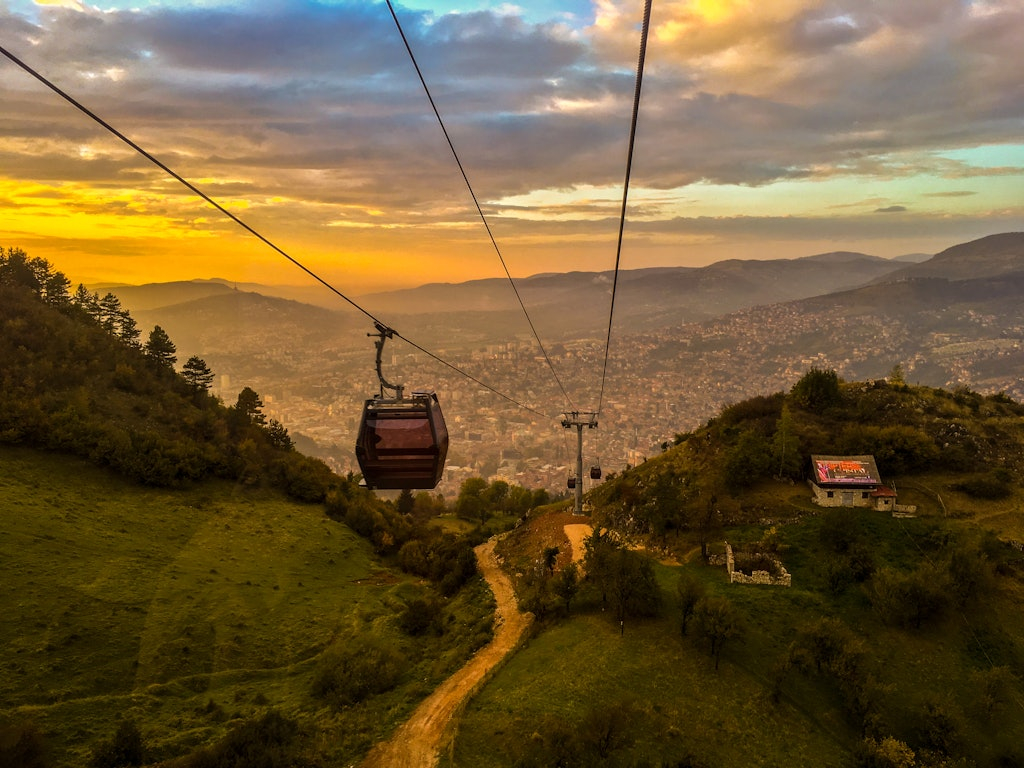
Reopened in 2018 after being destroyed during the war, Sarajevo’s cable car once again shuttles people on a nine-minute ride, climbing 500m to a viewpoint 1164m up on Mt Trebević. From here it’s a short walk to the wreck of the Olympic bobsled track, seemingly held together by layers of graffiti.
Yellow fortress
One of the most appealing yet accessible viewpoints gazing over Sarajevo’s red-roofed cityscape is from this bastion, known as Žuta Tabija. Built in the 18th century as part of the walls encircling Vratnik, it is now full of lovely old trees and has a cafe. It’s a popular place for picnickers and canoodling lovers. By tradition, the end of the Ramadan fast is formally announced by a canon shot from here.
Bijambare Caves
Bijambare Speleological Area is a protected natural site located northeast of Sarajevo on Sarajevo-Tuzla Highway (approximately 40 km from Sarajevo). Bijambare Caves is a speleological complex surrounded by thick conifer forest, two brooks, small lakes, several springs and a great variety of mushrooms, medicinal herbs and some rare endemic species. The area is ideal for outdoor picnics, hunting, fishing, hiking, speleological research.
The complex is comprised of several caves but only three are open to visitors.
The most popular cave is Srednja bijambarska pecina or the Middle Bijambare Cave. It is over 400 m long with a passageway which branches into four chambers ornamented with stalactites hanging from the cave roof extending into spectacular curtains and stalagmites which form the cave floor.
Skakavac Waterfall
Skakavac Waterfall is located 12 km north of Sarajevo, above the Nahorevo Village. It is a 98-m high waterfall, the second tallest in Europe.
It is a part of a Natural Park and it takes a 3-hour thrilling walk through the fir, beech, spruce, and ash tree forest. The waterfall is surrounded by endemic flora and fauna species and is great for mushroom and medicinal herbs picking. It is an oasis of peace and relaxation for all nature lovers, athletes, mountain bikers, photographers, hikers.
Vrelo Bosne
A three-kilometer long plane-tree and chestnut tree alley which runs from Ilidza will take you to a beautiful natural monument – Vrelo Bosne. The alley has 726 trees planted in 1894 and it is ideal for family day out long walks, bicycle and roller skate rides, jogging… The spring (Vrelo Bosne) rises at the foot of Mt. Igman and has over 60 karst springs. It is a morphological, hydrological, botanical and horticultural monument, and one of the locals’ favorite outdoor spots.
Bacevo, the main spring of drinkable water in Sarajevo, is located at Vrelo Bosne. It covers the area of 603 ha and it is a home to 26 plant species and more than 20 animal species, including some endemic species. One such, the brook trout can be found in Mala Bosna; six springs from the site of Vrelo Bosne pours into this stream.
The tree alley is also connected with Stojcevac, another outdoor spot with parks, forests, wild rose, raspberry and blackberry bushes. In a few-minute walk you can visit the archaeological site of the Church of St. Stephen the Protomartyr from the 10th century (Crkva sv. Stjepana Prvomucenika), as well as the Roman Bridge (Bridge at Plandiste) built in the Ottoman period.
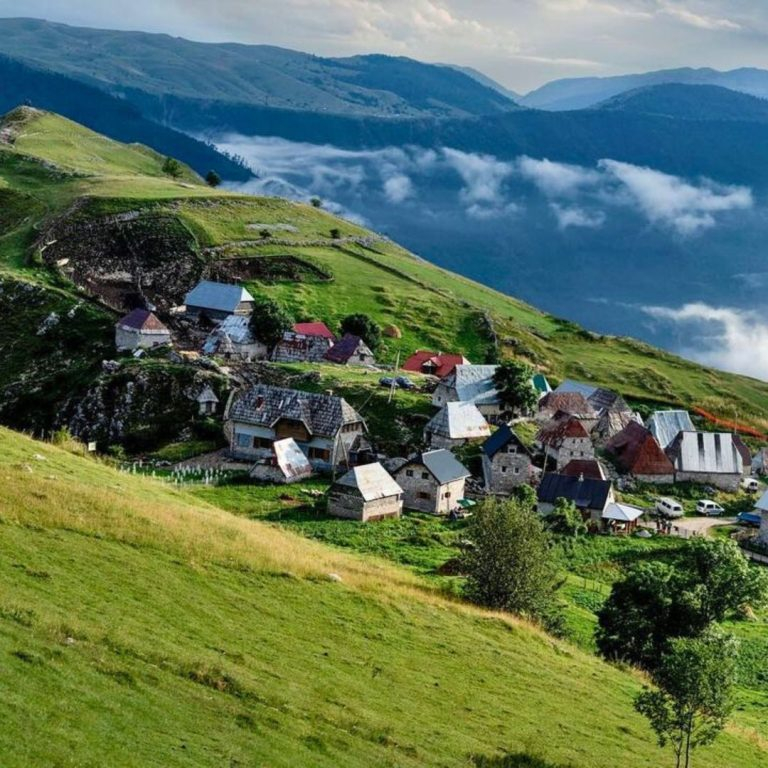
Lukomir Village
There is no better way to experience how the locals lived in the old times than the Lukomir Village (1496 m). This living museum which portrays day-to-day life of the Lukomir people is only 42 km from Sarajevo.
Lukomir is also known for its stone shingle-roofed houses. Due to harsh weather conditions, the village is approachable only on skies or on foot between December and April.
Women still wear traditional handmade clothes that resemble the woven clothes dating back several centuries. Villagers make colorful gloves, socks and similar accessories from natural wool and live by selling them, raising livestock and doing mountain agriculture.
The country’s and regions best film and music
Sarajevo has a good cultural life but the cream of the culture crop is the Sarajevo Film Festival, featured annually in mid-August. It is an excellent time to visit the city. The globally acclaimed eight-day film festival turns the whole city into a giant party with countless concerts and many impromptu bars opening on street corners.
The next best is the Jazz Fest Sarajevo, taking place in early November, with three days of concerts at major venues, and plenty of fringe events in the pubs and clubs around town. You can see international and local names and have yourself a great time.
Throughout July, make sure you see some of the events of Baščaršijske Noći, a wide-ranging arts festival that sees music, theatre and all kinds of performance arts hosted in the city centre.
The best place to hear traditional Bosnian music is Art Kuća Sevdaha. Sit in the intimate fountain courtyard of an Ottoman-era building sipping Bosnian coffee, juniper or rose sherbet, or herb-tea infusions while nibbling local sweets. The experience is accompanied by the lilting wails of sevdah (traditional Bosnian music) – usually recorded, but sometimes live. Within the building is a museum celebrating great 20th-century sevdah performers along with a store selling CDs.
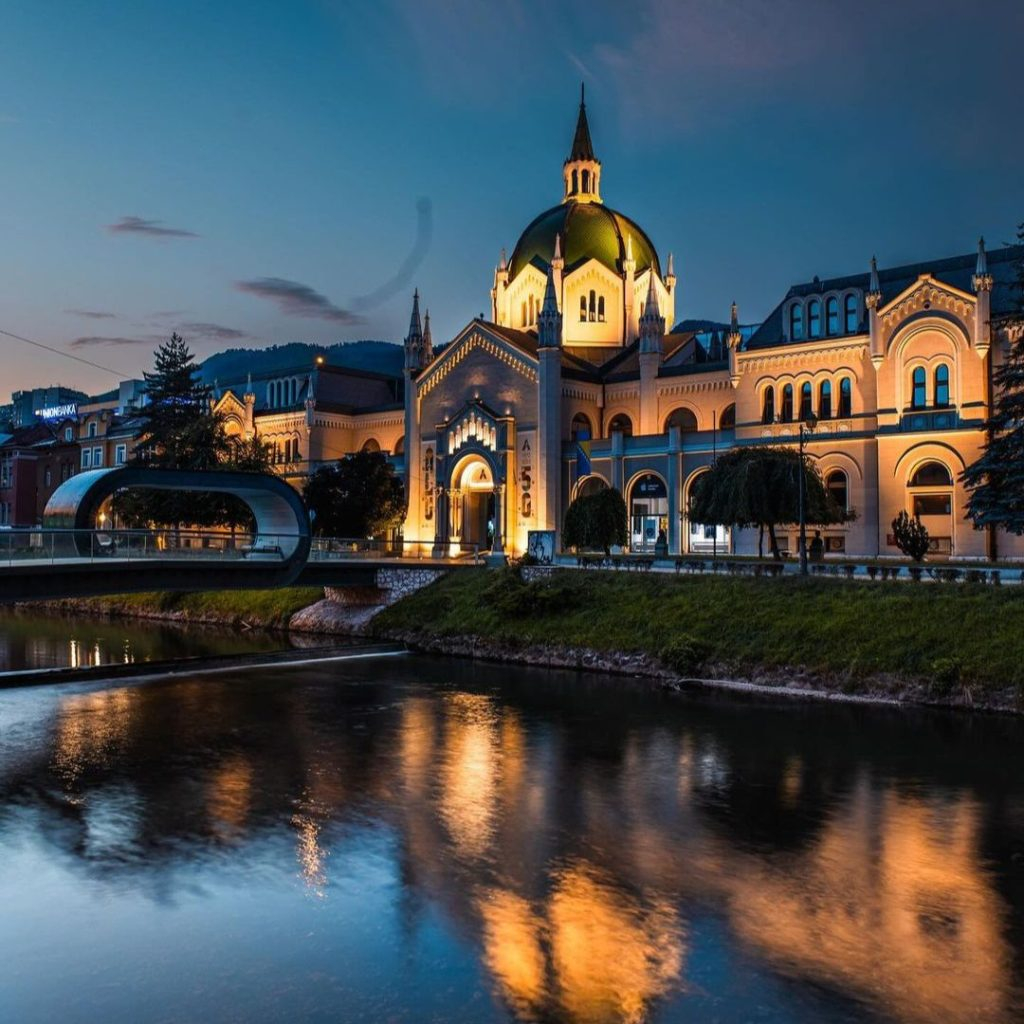
Originally built in 1899 as an evangelical church, the Academy of Fine Arts is a riverfront academy that resembles a mini version of Budapest’s magnificent national parliament building. Inside, the small ALU Gallery hosts occasional exhibitions.
Mountains
Sarajevo is surrounded by some amazing mountains – and it’s an excellent idea to explore them, summer or winter.
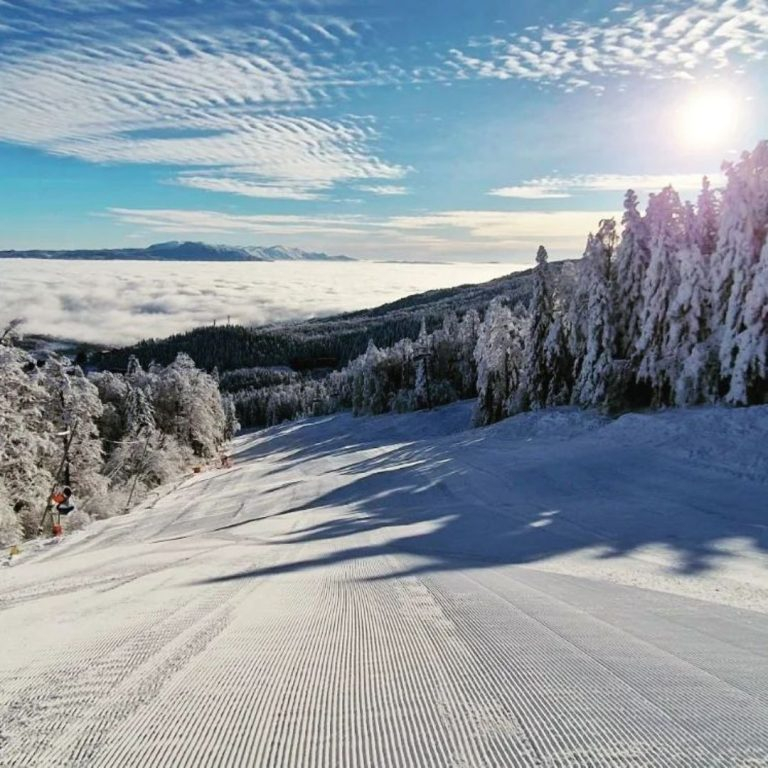
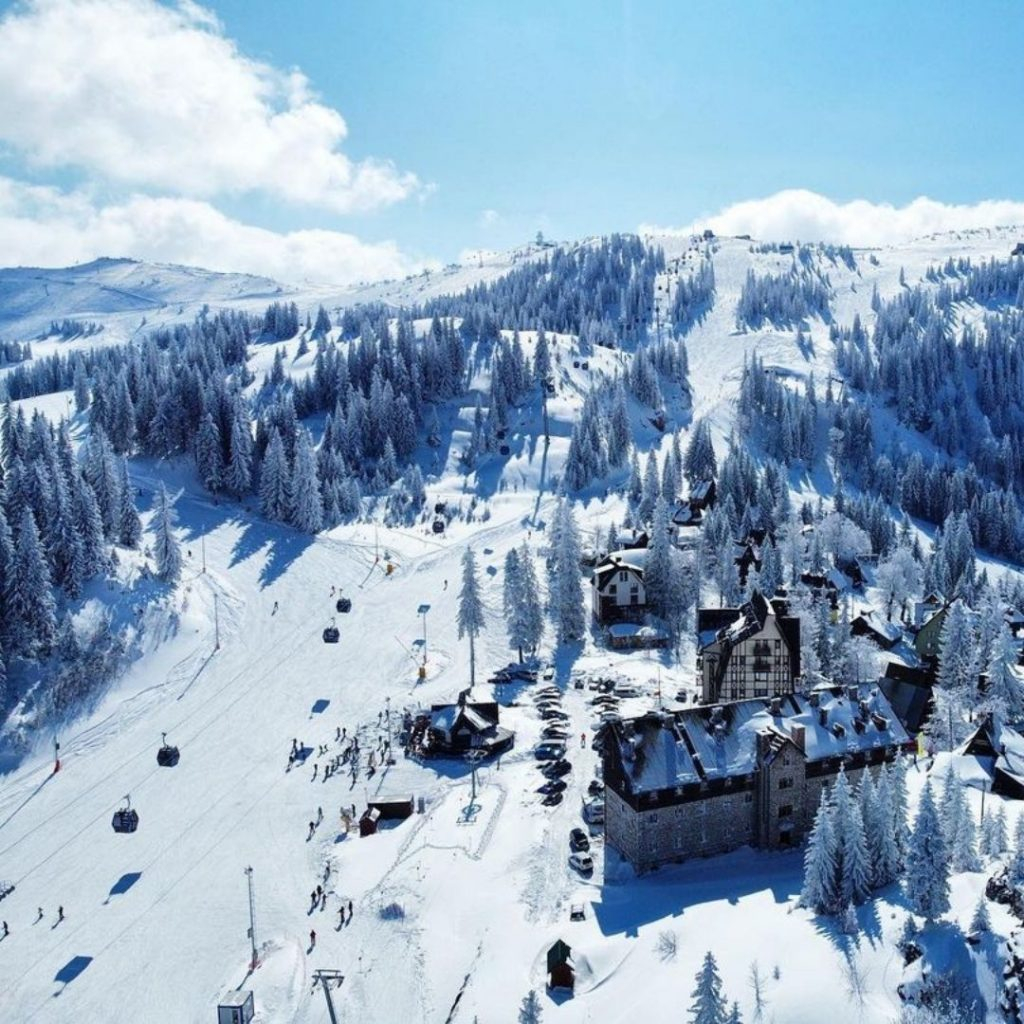
Of Sarajevo’s two Olympic skiing resorts, multi-piste Jahorina (26km southeast of the city, on the Republika Srpska side) has the widest range of hotels, each within 300m of one of seven main ski lifts. The ski season usually starts in mid-November and continues through to late March. The best skiing is in mid-February.
In summer the settlement becomes a semidormant cool-air retreat from the city, with some well-heeled locals escaping here for day-spa relaxation at the upmarket Termag Hotel.
Beside the longest slope, Rajska Vrata is a charming ski-in alpine chalet which sets diners beside a central fire with a giant metallic chimney or on the piste-side terrace. Specialities include double-cheese uštipci (Bosnian dough balls) and homemade juices (elderberry, rosehip, raspberry etc). Upstairs, six Goldilocks-esque pine-walled guest bedrooms have handmade beds fashioned from gnarled old branches.
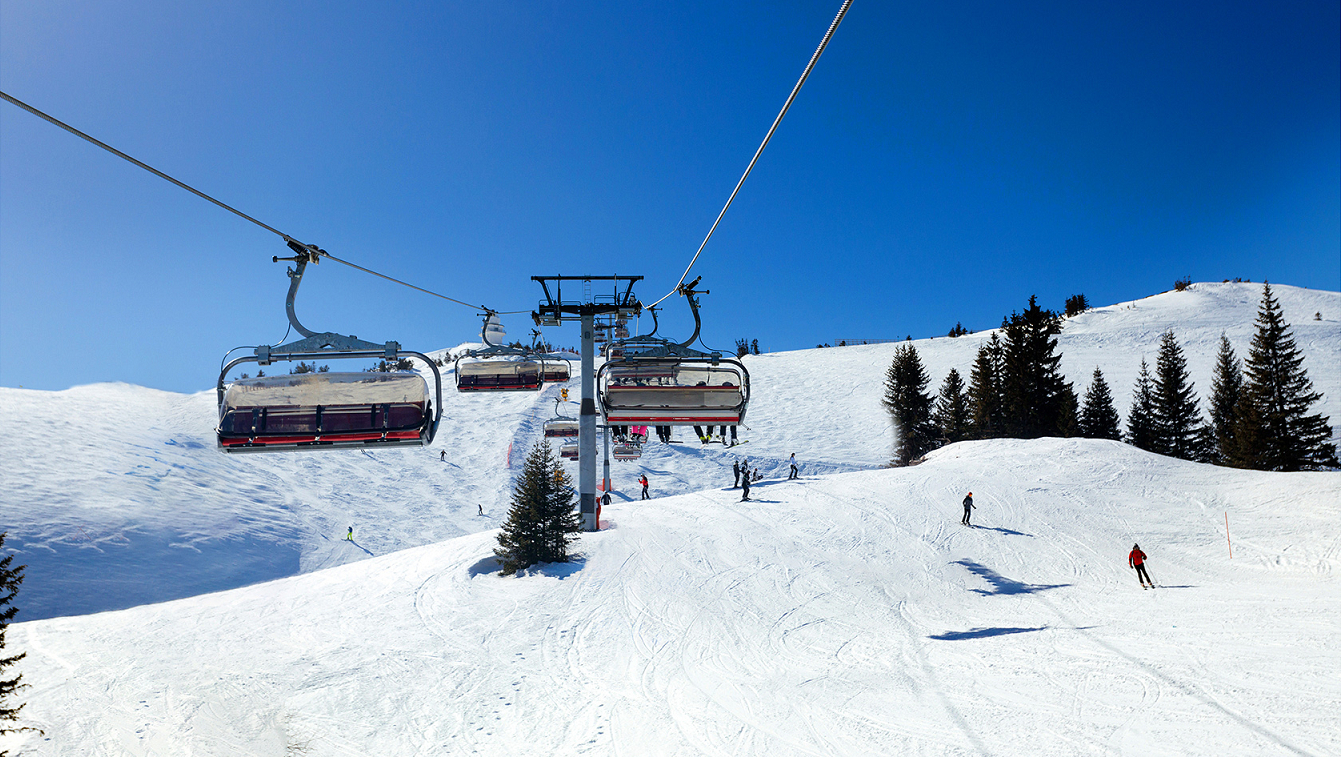
The ski resort of Bjelašnica, around 25km south of Sarajevo, hosted the men’s alpine events during the 1984 Winter Olympics. There’s usually enough snow to ski from around Christmas, and New Year is the busiest time, though February is more reliable for good piste conditions. Floodlit night skiing is offered, and the main lift also operates May to October, allowing walkers easy access to high-altitude paths.
In summer there are magical mountain villages to explore – Umoljani is one.
Getting to my home
Sarajevo International Airport is Bosnia’s busiest, with flights all over Europe and the Middle East., budget friendly Ryanair and Wizzaair also fly in and out of sarajevo airport and has direct flights to London, Rome, Barcelona, Paris, Vienna. Tuzla International Airport is tiny but a hub for budget airline Wizz Air, with flights to Austria, Switzerland, Germany, the Netherlands and Sweden.
Sarajevo’s public transport consists of trams, trolley buses and city buses. As a visitor, if you go to places that are outside of the city centre, make sure you buy a ticket at a kiosk before boarding, and validate it onboard as you enter.
By Land
Bosnia has multiple border crossings with Croatia, Serbia and Montenegro. Direct bus connections link Bosnia to all of its neighbours and to as far afield as Sweden.
My apt is 15 minute drive from a Sarajevo airport, it is connected by bus line and with taxi service.
Trains are slower and far less frequent than buses, but generally slightly cheaper. ŽFBH (zfbh.ba) has an online rail timetable search. The main routes are Sarajevo–Visoko–Bihać and Sarajevo–Konjic–Mostar.
Bus services are excellent and relatively inexpensive. There are often different companies handling each route, so prices can vary substantially. Luggage stowed in the baggage compartment under the bus costs extra (around 2KM a piece). Bus stations presell tickets.
There are off-road trails for mountain bikers, notably around Bjelašnica and Trebevic.
Driving makes sense to reach the country’s more remote areas. There are a few toll motorways in the centre of the country; collect your ticket from the machine at the set of booths where you enter, then pay at the booths where you leave the motorway.
Nearest airport
Sarajevo airport is 15 minute drive from my apt
Getting Around
Sarajevo has an extensive network of trams, buses, trolleybuses and minibuses, all operated by GRAS. You can pre-purchase tickets from kiosks, or buy from the driver; they must be stamped once aboard, and inspections are common. Tram 3 (every four minutes during the day) leaves from Ilidža and passes the National Museum, then loops one-way (anticlockwise) around Baščaršija. Tram 1 (every 17 minutes during the day) starts at the train station, then does the same loop as Tram 3.
I also live in Sarajevo so i can offer you guidance and help with must see locations and places.
Map of Approximate Location
This member has chosen to hide this section from Non-Premium members.
Elmir’s apartment building is very new and modern. In October, the central heating made the place wonderfully comfortable. The apartment, located on the fourth floor, is full of natural sunlight. I especially enjoyed the peaceful mornings, waking up to the mosque’s prayer call and sitting on the sofa to admire the maple-covered mountain.
Elmir is an excellent host. He kindly waited for my late arrival at 8 PM, even though he had a long drive back home. He patiently showed me how to use the stove and washing machine, which are quite different from what I’m used to. When I met some unexpected situations and asked him to help, he responded immediately. I truly feel lucky to have stayed in Elmir’s apartment and highly recommend it to all the PLUers.
Feedback for Jing·Non-Simultaneous exchange·14 nights
Ying was great guest, she was really easy to talk to, relaxed and communicative and it was really an honor to meet and host her in my apt which she left in pristine condition, we couldnt have asked for a better guest and we hope we will be able to visit her place in San Diego in next few years and meet her there again.
Feedback for Will·Non-Simultaneous exchange·9 nights
It was a real pleasure hosting and meeting Will, Paula and Beanie, during their 10-day stay—split between Sarajevo and Travnik. From start to finish, they were warm, respectful, and incredibly easy to communicate with.
Beanie was an absolute sweetheart—very calm and cheerful, and it was lovely to have such a kind young family around. Will and Paula were thoughtful guests who truly made the most of their time here while being considerate of the house and neighborhood.
I would gladly welcome them back anytime and highly recommend them to any future host, and im looking forward to meeting them again in London.
Premium
Elmir
Hi to all fellow travelers, we are a family of three, enthusiasts of travel and meeting and exploring new countries, cities and cultures. We are also looking forward to hosting you at our home where you can enjoy peace and tranquility after exploring everything our country and city has to offer. Im a psychologist and my wife is a pediatrician, our little boy is 2 years old and we are looking forward to traveling as a family and exploring all the places with our little boy.
People Like Us is the world's most trusted home exchange community. We believe in sharing, trust, generosity, respect, communication, equality, cooperation, honesty, hospitality, friendship, flexibility and adventure. We take pride in our homes and we care about the environment in which we live: our village, city, country and our planet. We care about the ethos of home exchange and we do it because we love the experience and the friendships that it generates.
Trebevic cable car and beautiful view over Sarajevo
Sebilj fountain
Bascarsija and its numerous cafes and restaurants. The favourite barbecue staple and the reason behind all the smoke wafting out of Baščaršija restaurants are ćevapi (barbecued, cylindrical spicy beef ‘fingers’. Taste these at Željo, Sarajevo’s most famous ćevabdžinica. They are served in a fabulously soft somun (pita bread) in portions of five or 10, and come with or without (you decide) fresh onions, ajvar (a sweetish pepper paste), kajmak (cheese curdle) and a fresh cabbage salad.
Do not miss the burek and pita experience – this is fillo pastry that is filled with meat, cheese, potato or spinach. Step into a buregdžinica and don’t forget to order a yoghurt alongside your pita. Burek is the name for the meat option, sirnica is filled with cheese, krompiruša with potato and zeljanica with spinach; in season, try the tikvenica – a pita with pumpkin.
Local dessert favourites are baklava, tufahije (baked apples stuffed with walnut paste and topped with whipped cream), and hurmašice (syrup-soaked sponge fingers), all found in a good slastičarna (cake shop).
Gazi Husrev-beg Mosque
Bjelasnica and Jahorina mountains
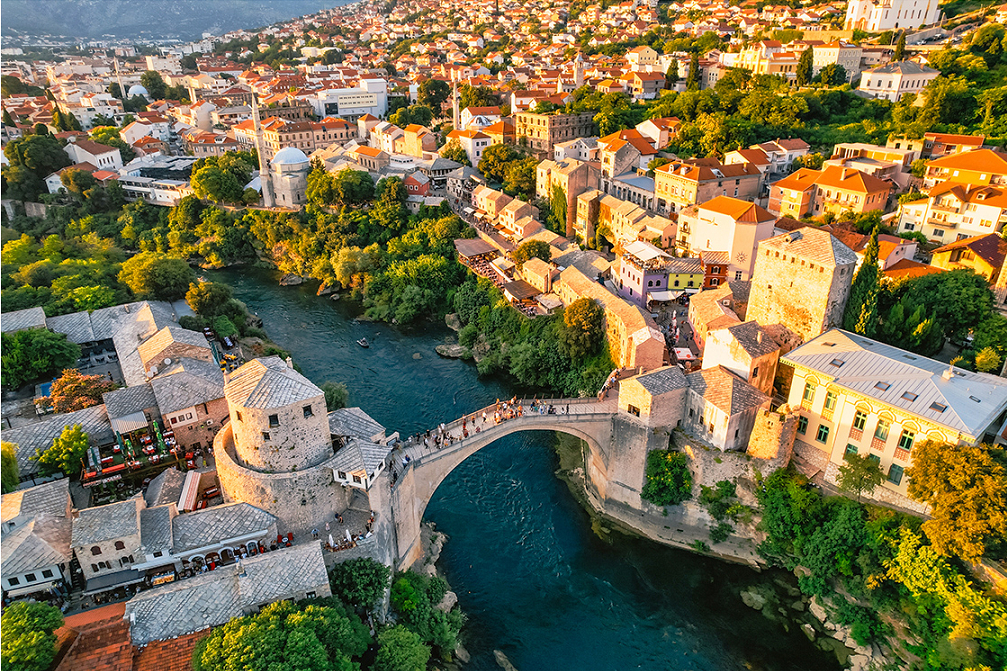
Day trip from my apt, hour and a half with car or by train and bus, beautiful and world-famous Stari Most (meaning ‘Old Bridge’) is Mostar’s indisputable heart. Its pale stone magnificently reflects the golden glow of sunset or the tasteful night-time floodlighting. The bridge’s swooping arch was originally built between 1557 and 1566 on the orders of Suleiman the Magnificent. An engineering marvel of its age, the bridge was pounded into the river during a deliberate Croatian artillery attack in November 1993.
The current structure is a very faithful 21st-century rebuild, painstakingly reconstructed using 16th-century building techniques and stone sourced from the original quarry. It reopened in 2004 and is now a Unesco World Heritage site. In addition to its perennial bridge divers, you can watch the annual diving competition if you’re here in late July. In any case, sit in one of the numerous well-positioned cafes and restaurants and savour the splendid view.
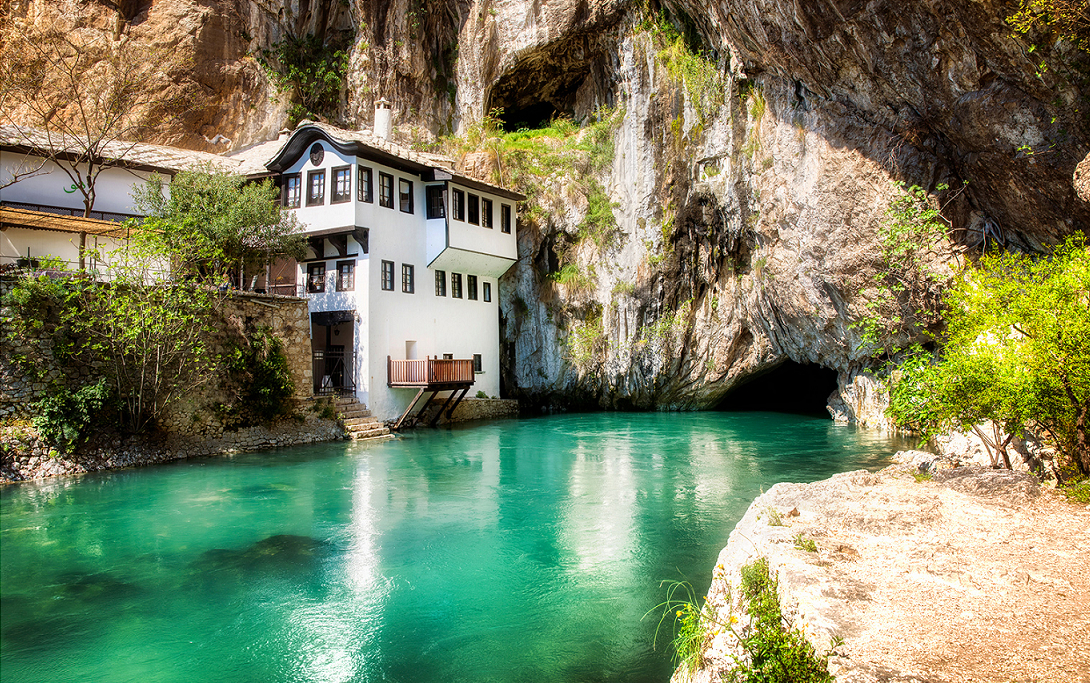
Source of the Buna River, Blagaj Tekke is few minutes away from Mostar, pretty Blagaj hugs the turquoise Buna River at its source – it gushes out of a cave past a historical tekke (Sufi dervish spiritual house), several enticing restaurants and Ottoman-era homesteads.
Forming Blagaj’s signature attraction is Blagaj Tekke (Blagajska tekija), and the centrepiece of this complex of traditional stone-roofed buildings is a very pretty half-timbered dervish house with wobbly rug-covered floors, carved doorways, curious niches and a bathroom with star-shaped coloured glass set into the ceiling. The dervishes follow a mystical strand of Islam in which the peaceful contemplation of nature plays a part; hence the idyllic positioning of the tekke above the cave mouth from which the Buna River’s surreally blue-green waters flow forth. The last sheikh died in 1923 and the tekke was inactive for a long period since before WWII. It is now once again a venue for dhikr praise-chanting three nights a week.
In summer you can take a five-minute boat ride pulled along on a rope, into the Buna Cave from a landing directly opposite the tekke; it is the spring of the Buna, and you can drink the water.
High above Blagaj and accessible only on foot are the hefty ruins of Stjepan Grad, a powerful medieval fortress. Although it’s been fortified since Roman times, it’s named after 15th-century herceg (duke) Stjepan Kosača, who had his residence here and from whom the name Hercegovina is derived. A garrison was stationed here up until 1835 when it was abandoned. Allow an hour for the walk up (less back) and wear sturdy shoes.
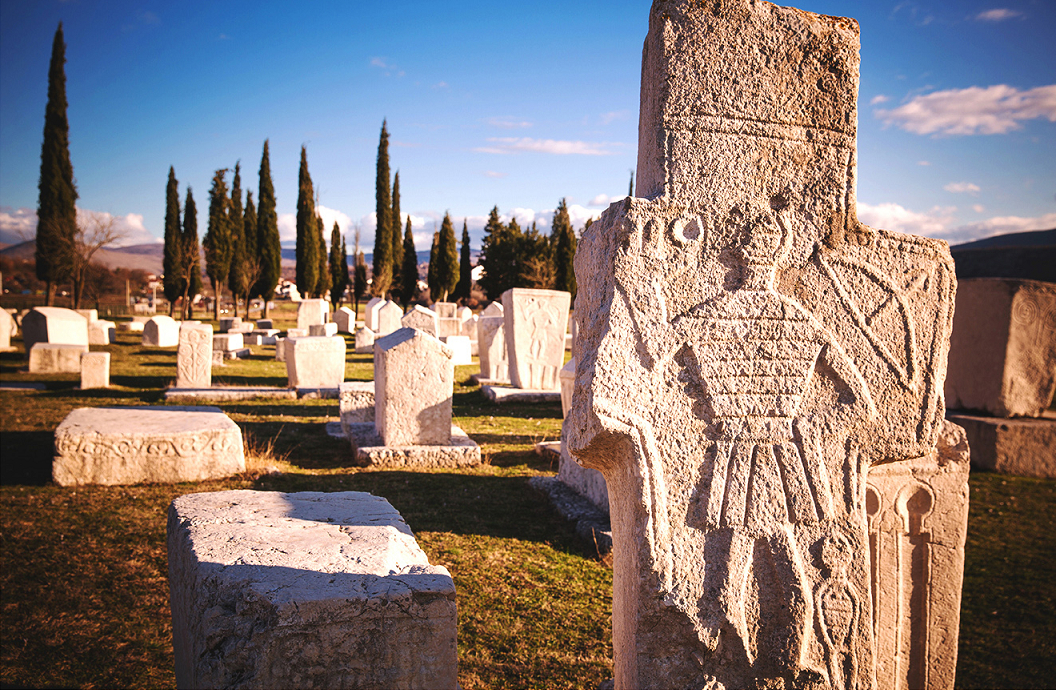
Radimlja Necropolis, well worth a stop if you’re driving from Sarajevo to Trebinje, Stolac is one of Hercegovina’s prettiest castle towns, with a history going back to Roman times.
Near Stolac are two sets of classic stećci (grave-carvings), listed as World Heritage sites by Unesco since 2016. Beside the Mostar road, 3km west of Stolac, is the famous Radimlja Necropolis with around 110 white stone blocks intricately carved.
While less celebrated than the stećci at Radimlja, the 270 Boljuni Stećci – arranged in two groups under venerable oak trees – feature the cross-shaped tombstone of warrior-hero Vlatko Vuković. Boljuni is 12km from Stolac, 4.2km off the Stolac–Neum road, itself a narrow, rural delight passing right beside the Hutovo fortress ruins.
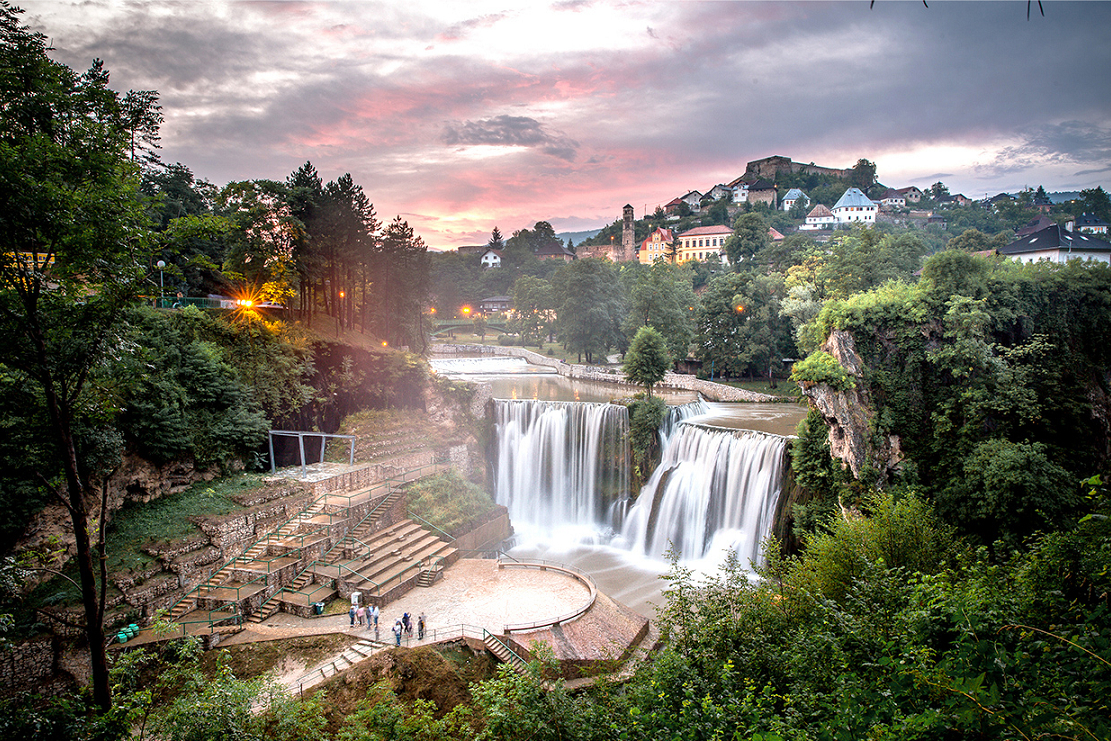
Jajce and its waterfall is also a day trip from Sarajevo and my apt, 2 hours with car and bus, it is a historical gem, with a highly evocative walled Old Town clinging to a steep rocky knoll with rivers on two sides. The Pliva River tumbles into the Vrbas River by way of an impressive 21m high urban waterfall right at the very foot of the town walls. Immediately to the west, the Pliva is dammed to form two pretty lakes that are popular with swimmers, strollers, bikers and boaters.
A viewing platform (adult/child 4/2KM) has been built opposite the waterfall’s base, accessed from stairs that start between the bus station and the petrol station. In the first week in August, daredevils leap from the waterfall in an annual competition featuring around 30 professional divers.
Jajce’s fortress ruins have a powerful aspect when seen from afar, but inside is mostly bald grass. The ramparts offer sweeping views of the valleys and crags that surround Jajce’s urban sprawl, though views of the fortress are generally more memorable than views from it. The castle’s most photographed feature is the partially conserved Kotromanić stone crest beside the entrance portal, and you don’t have to enter to see that.
Two idyllic lakes, west of Jajce, reflect the surrounding wooded mountains in their clear waters and are popular for boating and simply strolling or cycling around. Between them lie the Mlinčići, a cute collection of 20 tiny wooden watermills. At the bottom of the lower, smaller lake, boardwalks cross a pretty set of rivulets spilling into a dam basin, which is a popular swimming spot.
Travnik, the Birthplace of Ivo Andrić is an hour away from my apt, and place where i have an apt also
Once the seat of Bosnia’s viziers (Ottoman governors), the castle town of Travnik is now best known for its sheep’s cheese and as the birthplace of Nobel Prize–winning author Ivo Andrić, who set his classic novel Bosnian Chronicle (The Days of the Consuls) here. It’s a pleasant place to spend a couple of hours while travelling between Sarajevo and Jajce.
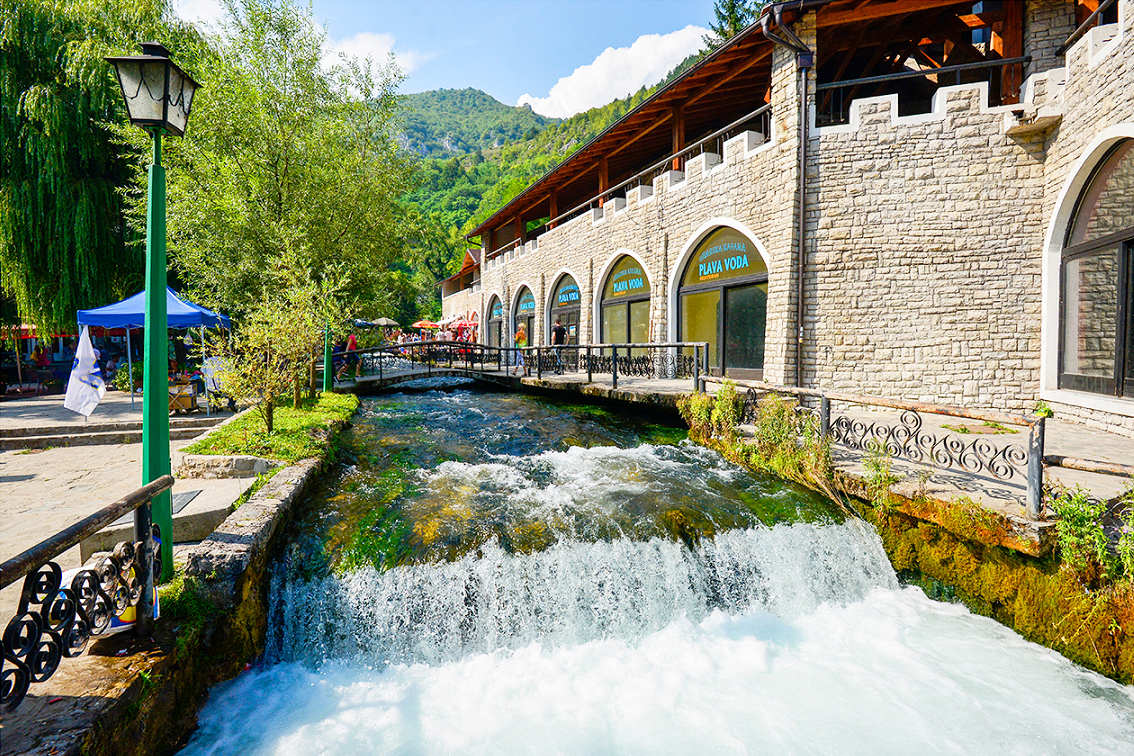
Travnik’s 15th-century Old Town Fortress surveys the city from a shoulder of hillside. The stone walls gleam so brightly in the sunshine that they appear to have been scrubbed. The fortress looks over Plava Voda (‘Blue Water’), a convivial gaggle of restaurants flanking a merrily gurgling stream, crisscrossed by small bridges – you should definitely have your lunch here.
Although officially called Sulejmanija Mosque, everyone in Travnik calls this Šarena Džamija (Many-Coloured Mosque), a longstanding nickname that references its famous frescoed facade. The colours have since faded but the building remains notable for the bezistan (mini-bazaar) built into the stone arched arcade. There’s been a mosque here, at Travnik’s centre point, since the 16th century. Its current form dates from 1757, although it was largely reconstructed after a major fire in 1815.
Don’t miss the Viziers’ Graves, a collection of finely carved turbe (tombs) of Bosnia’s Ottoman governors, clustered at the western end of the main shopping strip, along with those of prominent court officials and poets.
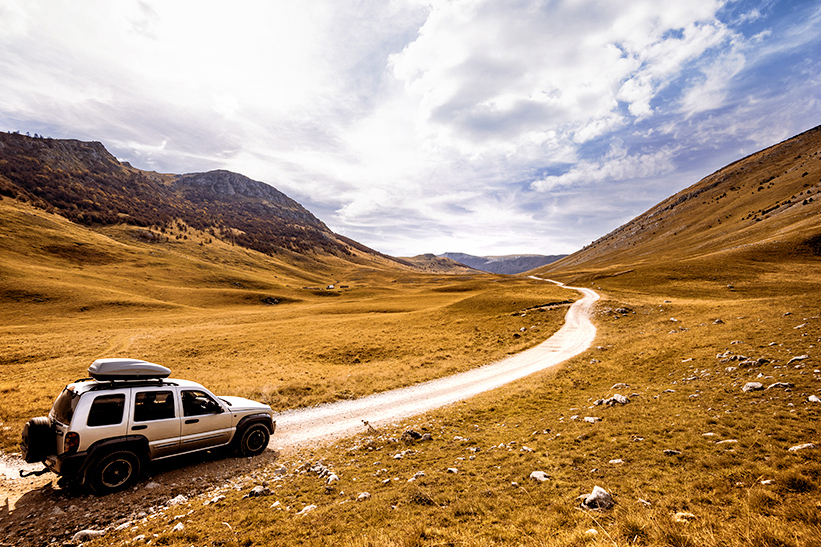
Local scenic road to old picturesque village of Lukomir on Bjelasnica
The Academy of Fine Arts, which was originally built to serve as an Evangelical Church, is considered one of Sarajevo’s loveliest buildings.
Once BiH was occupied by the Austro-Hungarians in 1878, the number of Evangelicals in Sarajevo grew significantly, so there was a greater need for them to build their first church.
The main initiator for the construction was the Austrian, Filip Balif, while one of the most well-known architects from Sarajevo, Karlo Paržik the Czech, was responsible for the design. The church was opened on November 19, 1899.
By the end of the First World War, most Evangelicals had left Sarajevo, along with the Austro-Hungarian Army, so the church began to lose its original function.
At the end of the 1970s, Vlado Nagel, one of Sarajevo’s last Evangelical Christians, signed over the Church property to the city authorities, who later renovated and adapted the building in 1981, making it a home for the Academy of Fine Arts.
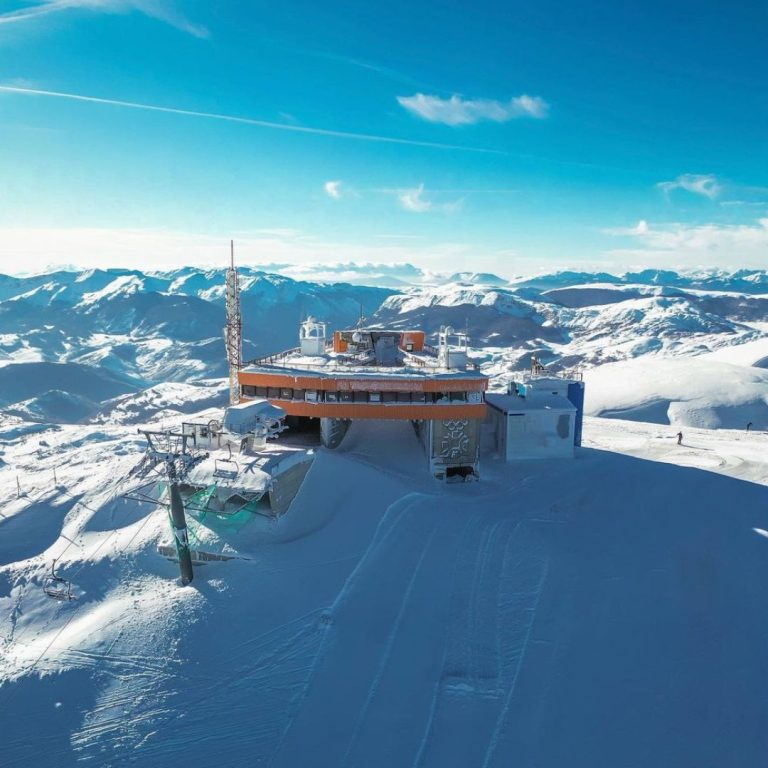
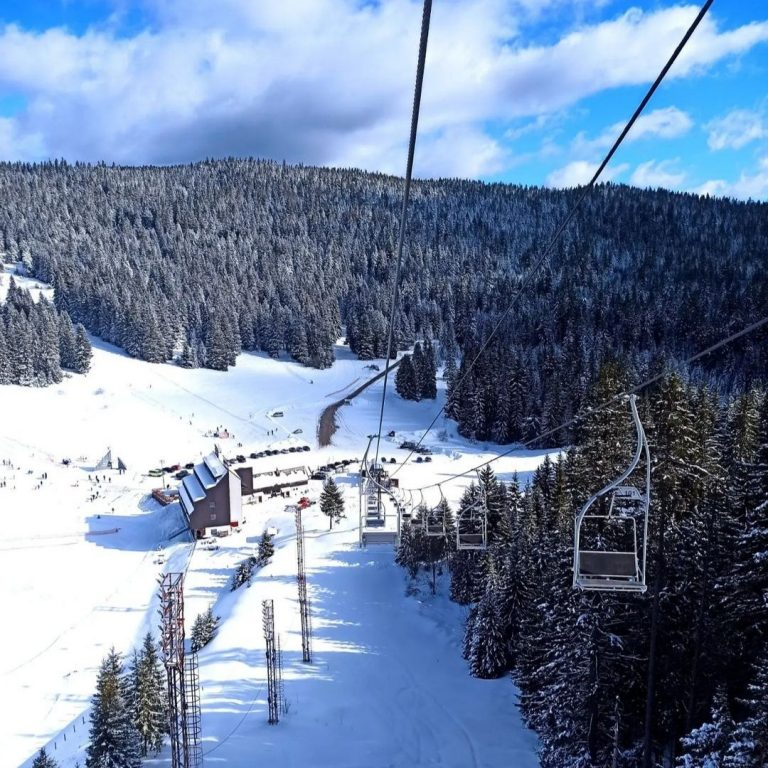
Bjelasnica observatory on top of Bjelasnica, where you can go with a cable car in summer as in winter
The Bjelašnica - Igman Olympic Center is only 25 kilometers away from Sarajevo. These These mountains experience over 200 snowy days annually, and in case of insufficient amount of snow, it has a system for artificial snowmaking. So don't worry, just choose your skis or snowboard, relax and enjoy! A certain part of the slopes is illuminated with professional lighting for all fans of night skiing.
The center includes three skiing destinations: Babin Do on Bjelašnica, whose slopes represent the top quality of European skiing slopes, and Veliko and Malo Polje on Igman. The Babin Do ski resort has eight ski tracks and five children's tracks, three gondolas and five ski lifts, all leading to the summit of Bjelašnica at the elevation of 2,067 m. For skiers, this mountainous beauty offers 14,000 m of slopes for alpine skiing, while the total length of the slopes on Igman is 2,000 m. Due to its location in the middle of a pine forest, the air quality in Igman's Veliko Polje is considered one of the best in Europe.
The Olympic Center Jahorina is located on the majestic mountain of the Dinaric Alps, with its highest peak, Ogorjelica, reaching 1,916 meters above sea level. Thanks to its unique climate, where cold continental and warm Mediterranean influences meet, Jahorina offers ideal conditions for both winter and summer tourism. This place, rich in natural beauty and modern facilities, maintains its status as the region’s leading tourist destination through continuous investment and constant improvement of its offerings, providing visitors with an unforgettable experience all year round.
In summer, Jahorina transforms into a destination rich in activities for all generations. The Alpine Coaster, one of the largest in Europe, provides an adrenaline-fueled ride through Jahorina’s stunning landscapes. Additionally, the center offers gondola rides, an adventure park, zipline, karting tracks, tubing, trampolines, and much more. The adventure park is ideal for families, while the karting track and zipline attract thrill-seekers of all ages.
Climate and Accessibility
Jahorina’s climate, with an average snow depth of 5 meters and 145 days of snow cover, allows for a long ski season. Due to its proximity to Sarajevo, the capital of Bosnia and Herzegovina, Jahorina is easily accessible to visitors from across the region. The journey from Sarajevo Airport to Jahorina takes less than an hour, making it an accessible destination for tourists from near and far.
Entertainment and Apres-Ski Program
Jahorina is not only a ski center—it’s also a place for fun and relaxation. At the base of the mountain, visitors are welcomed by numerous cafes, restaurants, and bars, including an outdoor bar in front of the Olympic Bar, where apres-ski parties are held throughout the winter season.
All these features make Jahorina the perfect choice for those looking to combine sports, recreation, and enjoyment of nature, whether they come for the winter wonderland or a summer filled with adventure. With its rich selection of activities, premium accommodation, and impeccable service, the Olympic Center Jahorina remains the leading tourist destination in the region.
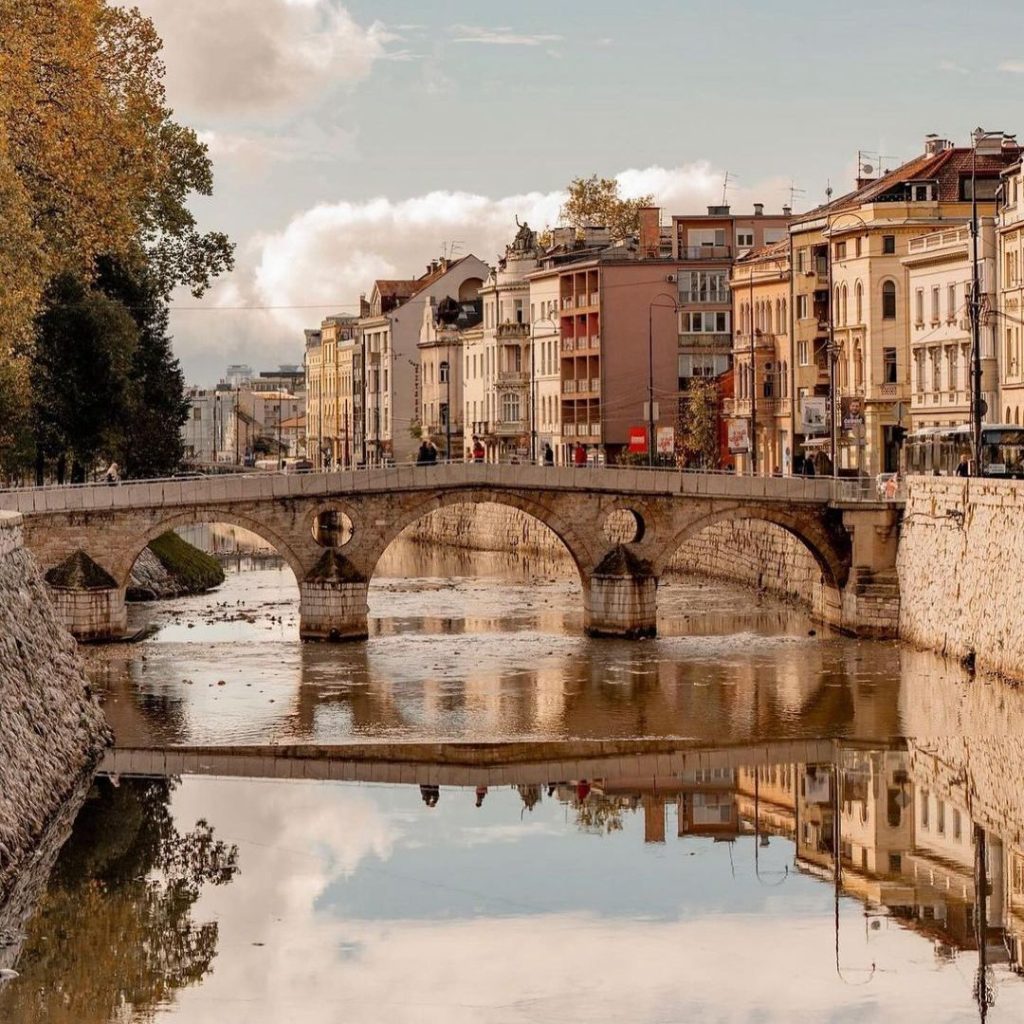
Latin bridge
A ledger from 1541 makes the first mention of a bridge located on the spot where the Latin Bridge is found today, stating that it was built by one sarač (leather worker) named Husein, the son of Širmed.
One can conclude from a later document that this initial wooden bridge was soon destroyed and a stone bridge was built in its place by Ali Ajni Bey, a prominent Sarajevan.
This stone bridge was later washed away by a great flood in 1791, but in 1798 a wealthy trader from Sarajevo, Abdulah Briga, donated funds for the construction of the Latin Bridge that can be seen today.
The bridge took its name from the neighborhood on the left bank of the Miljacka, where Sarajevo’s Catholics resided.
From 1918 to 1993 the structure bore the name, Principov Most (bridge), after Gavrilo Princip, who was only a few meters from this bridge when he assassinated Archduke Franz Ferdinand and his wife, Sofie. This incident, known as the Sarajevo Assassination, led to the beginning of the First World War.
The Latin Bridge is one of the oldest bridges left standing in the city and is a fine example of a preserved Ottoman Bridge. However it is bridge’s northernmost tip which is its most important feature.
Lukomir is one of the most picturesque and historically rich villages in Bosnia and Herzegovina! Located on the majestic Bjelašnica Mountain, 1495 meters above the sea, Lukomir offers breathtaking views of the surrounding landscape and a unique insight into the traditional culture and way of life of the region.
As you wander through the narrow streets and alleys of Lukomir, you’ll travel back in time to a world of thatched roof houses, cobblestone paths, and stone walls that have remained unchanged for centuries.
You’ll have the opportunity to see and learn about the traditional architecture and techniques used to build these homes, as well as the daily life of the villagers who still inhabit the area. You can also see the necropolis of stećak tombstones in the immediate vicinity of the village.
One of the highlights of a visit to Lukomir is the breathtaking panoramic view from the top of the village.
From here, you can admire the rugged beauty of the surrounding mountains and valleys, and take in the fresh, crisp mountain air.
In addition to exploring the village itself, you can also go hiking in the surrounding mountains and experience the natural beauty of the region up close. Whether you’re interested in bird-watching, wildflowers, or simply taking in scenic views, there is something for everyone in Lukomir. So if you’re looking for an authentic and memorable travel experience, come and visit Lukomir.
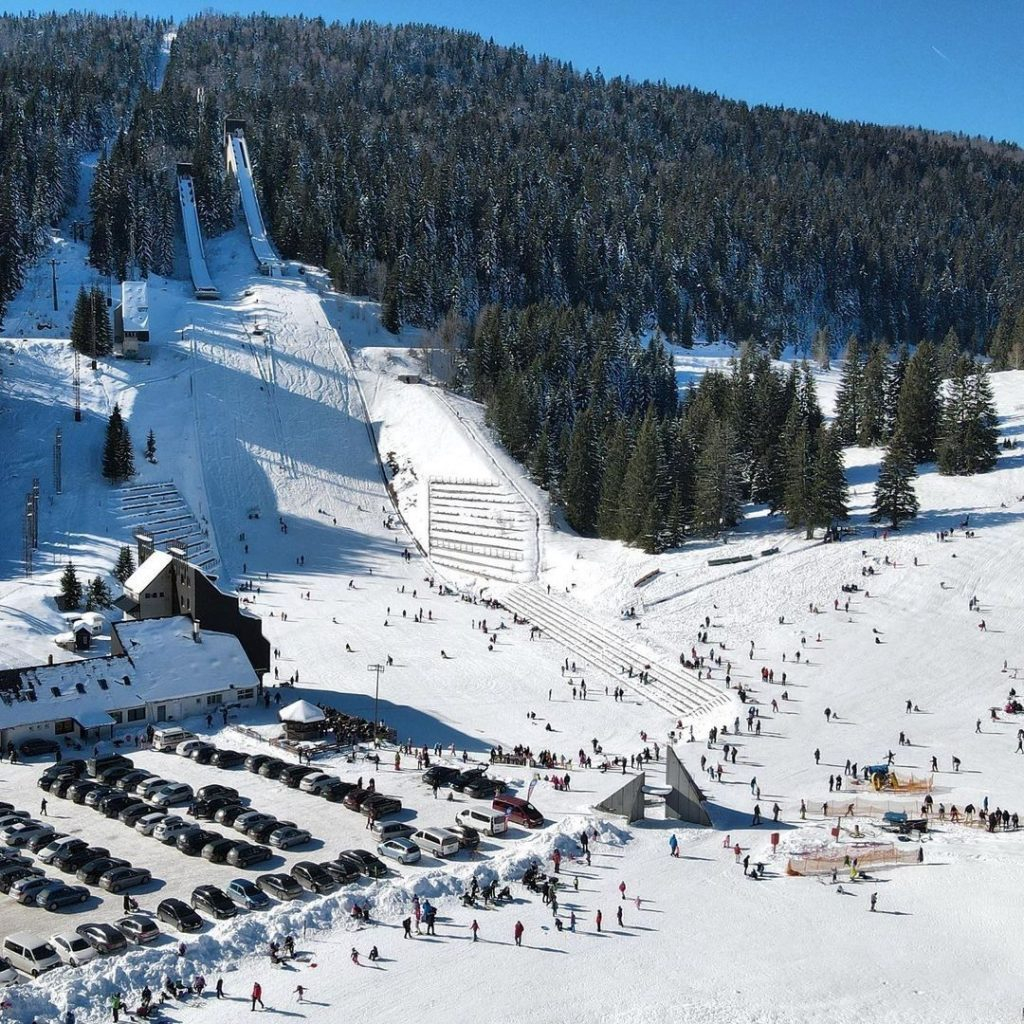
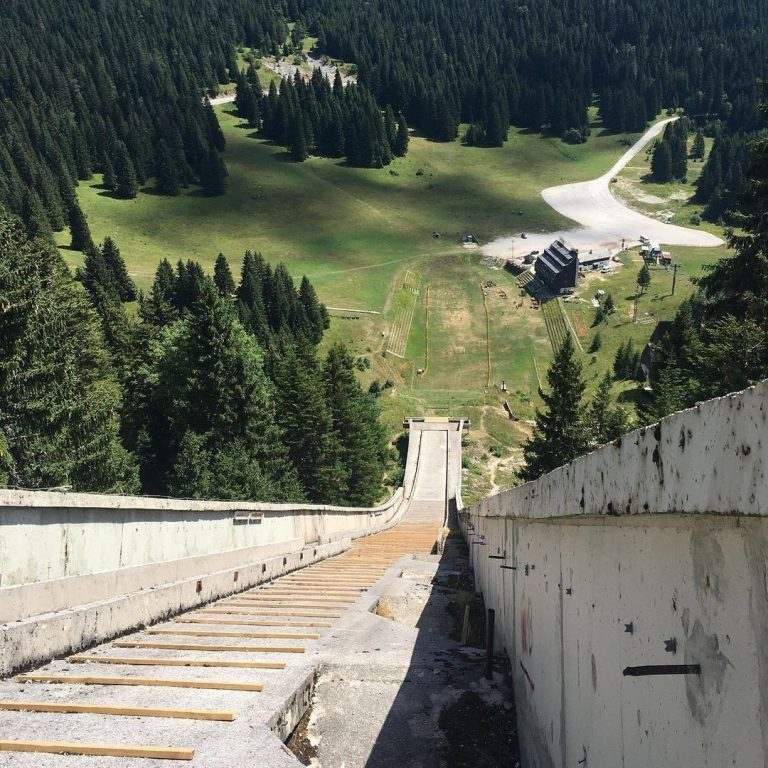
During the XIV WOG 1984 in Sarajevo, Igman was the venue for competitions in Nordic ski disciplines, skiing and biathlon, as well as 70 and 90 meter ski jumps.
Sadly, Igman was a battlefield where fierce conflicts raged during both liberation wars (1941-1945, 1992-1995). The famous Igman March of the Second World War, a military operation by the First Proletarian Brigade of the National Liberation Army of Yugoslavia, was carried out under severe weather conditions, during the night between January 27th and 28th, 1942. The temperature at the time was -40 C. During the last war, all hospitality and ski infrastructure was destroyed, and today, ski jumps are not in operation.
However, both Veliko polje (Big Field) and Malo polje (Small Field) on Igman are slowly regaining their old glow. Nowadays, there is up to 39 kilometers of Nordic skiing tracks and over 30km long biathlon tracks with 30% ascent and descent. In addition, there are 9 junior ski slopes with ski-lifts for children.
Just opposite the Olympic ski jumping hills is the Igman Mountain House. Built from natural materials at 1246m above sea level, it offers striking views of the top of Bjelašnica. The house is open all year round and boasts 6 sleeping rooms with total of 50 beds. In 2007, the magazine “Start” declared Igman Mountain House the best mountaineering facility in BiH.
Only 8km away from Malo polje at 1315 MASL is the mountain house Hrasnički stan (Hrasnica Apartment). It is one of the favorite hiking and family outing destinations which can be reached not only by car, but also by two-hour walk from Hrasnica or an hours’ walk from Veliko polje. The comfortable interior ensures a pleasant stay.
Igman is always interesting, not only during the winter. With its lush vegetation it is a real “air spa” just outside the city. From spring to late autumn, Igman is the best place for walks, hiking, mountaineering and cycling; in general, this mountain is ideal for those who love untouched nature.
Both Ski Center Igman, and especially Veliko polje are famous for mountain biking. During the summer, you can rent a bike in Veliko polje, and there are trails available, which are marked and maintained.
A moderately difficult trail 34.7km long leads from Sarajevo through Ilidža all the way to the mountain house Hrasnički stan. From there, just over 4km away, next to the “war mosque” Igman, we reach Vrhovi (The Peaks).
Igman olympic mountain few minutes from my apt
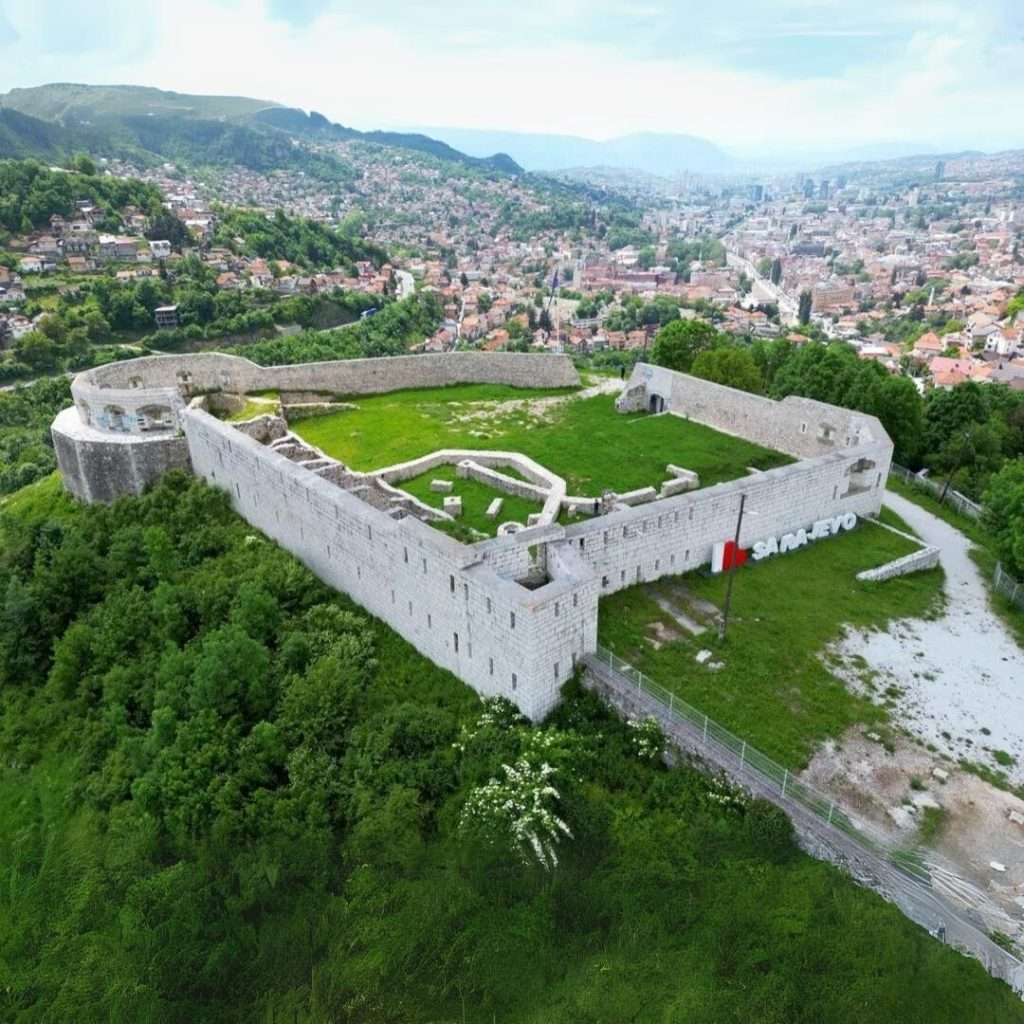
The White Fortress,
which is situated atop a hill that offers a fantastic view of Sarajevo and its surroundings, is one of the five fortifications that were built as part of the defensive wall around the old town of Vratnik.
It is believed that the White Fortress, which overlooks the eastern entrance to the Sarajevo Valley, takes its name from the white rocks that were used in its construction.
Archeological research indicates that the oldest parts of the fortress were built during the Middle Ages, at the end of the 14th or beginning of the 15th century, and that other sections were added during the Ottoman period and then later during the Austro-Hungarian period.
The White Fortress is a National Monument of Bosnia and Herzegovina and, given the incredible view, it is one of the most visited tourist attractions in Sarajevo.
You may enter the fortified structure every day from 10:00 a.m. to 7:00 p.m., for a flat rate of 5KM.
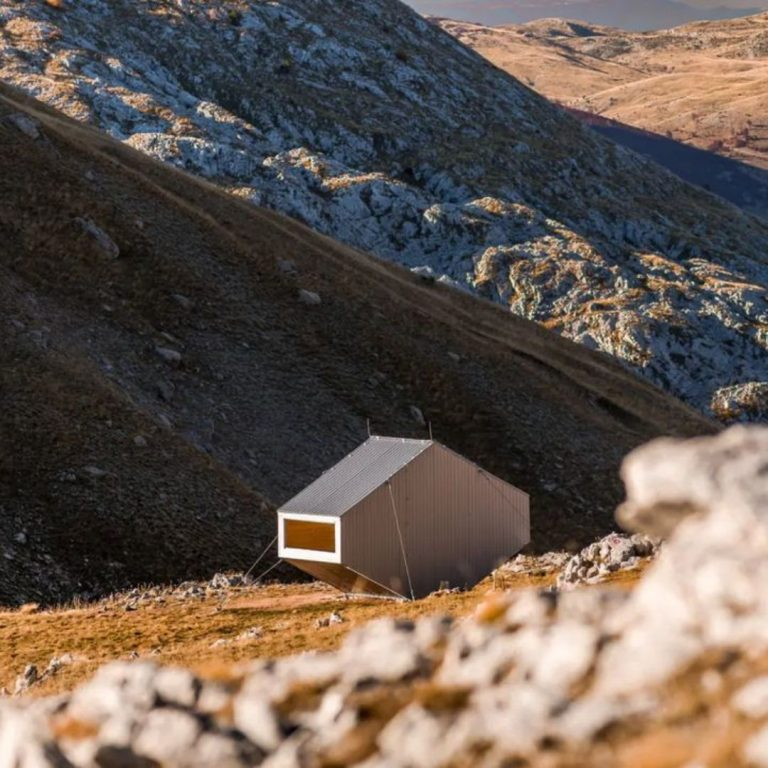
Mountain hut on Visocica
Quad bike ride, hiking, jeep safari, or cycling – the choice is all yours, and the best part is, all you need is a good mood and company.
This beauty is nestled between the beautiful mountains Bjelašnica, Prenj, and Treskavica, and is carefully bordered by the rivers Neretva, Ljuta, and Rakitnica to provide true lovers of hiking and outdoor activities with an unforgettable experience. Bjelašnica and Visočica are only separated by the Rakitnica River, that’s only half an hour away from Sarajevo, which provides an unforgettable experience, and its magical Canyon is the second deepest in Europe and represents a miracle of wild nature.
Pristine nature and the mountain pastures add up to the feeling of serenity and lightness, and during spring and summer, you can see Veliko jezero (the Great Lake), carefully settled between giant stone cliffs. As you walk along the winding paths, Malo and Veliko Brdo appear in front of you and add to the delight, making you feel like you’re dreaming. You can see the peaks of Bjelašnica, Lukomir, Lelija, and Zelengora in the palm of your hand.
So you can enjoy magnificent scenery even during the break. If you want, you can also enjoy a quiet night in nature watching the stars from the ”Zoran Šimić” bivouac. Let the Visočica Mountain be your choice regardless of whether you are an experienced hiker or you simply want to clear your mind by enjoying a stroll in nature. Explore the amazing flora and fauna, and part of our cultural heritage along with experienced guides.
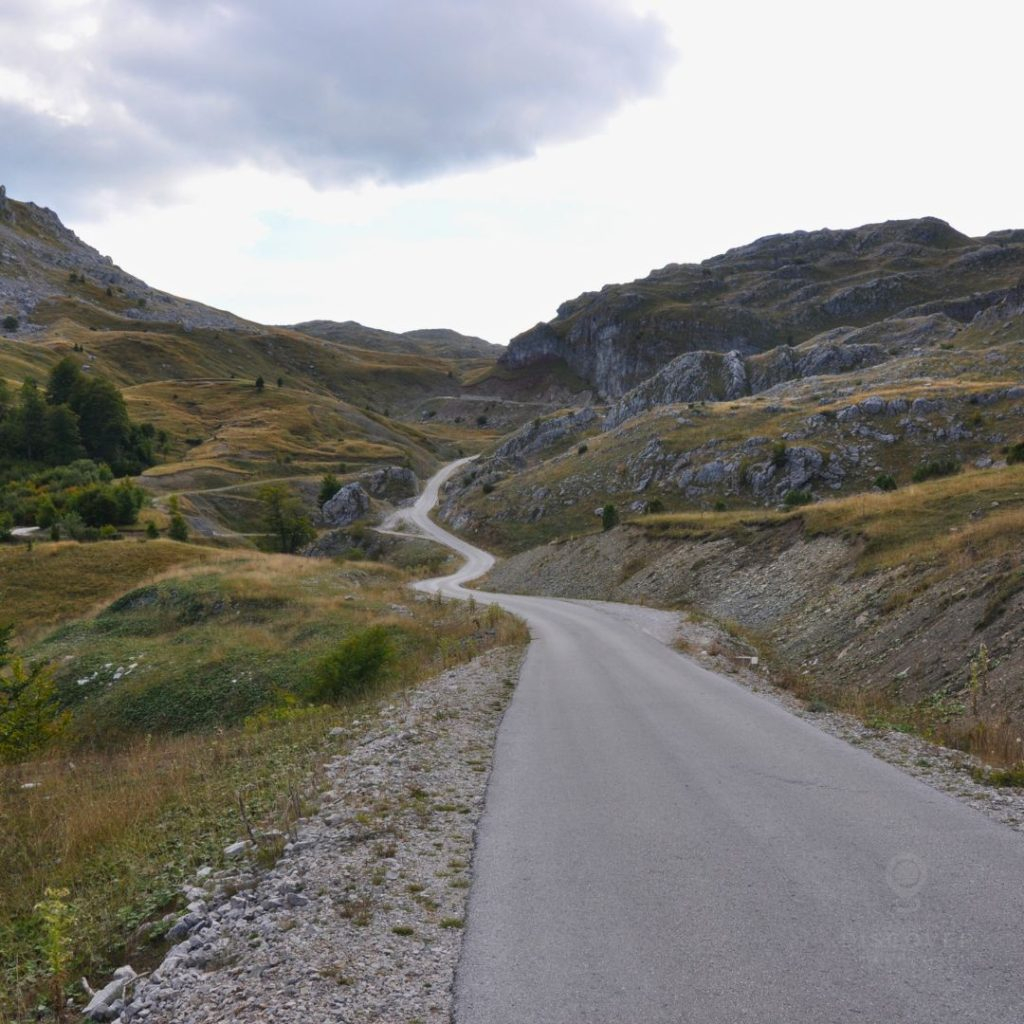
Scenic mountain road on Visocica connecting Sarajevo with Konjic
Are you sure?
This action will create an additional new home profile in the People Like Us system.

 Language
  Europe
 United States
 Canada
 Australia
 France
 Spain
Spain
 The Netherlands
 New Zealand
 Italy
Italy
 Denmark
 Germany
 Sweden
 Mexico
 Português