Make Travel Personal Again!
"At its core, PLU isn’t about real estate. It’s about people." Drew Seitam, co-Founder of People Like Us, is interviewed in the Escape Home
Drew
Feb 11, 2026 · 5 min read
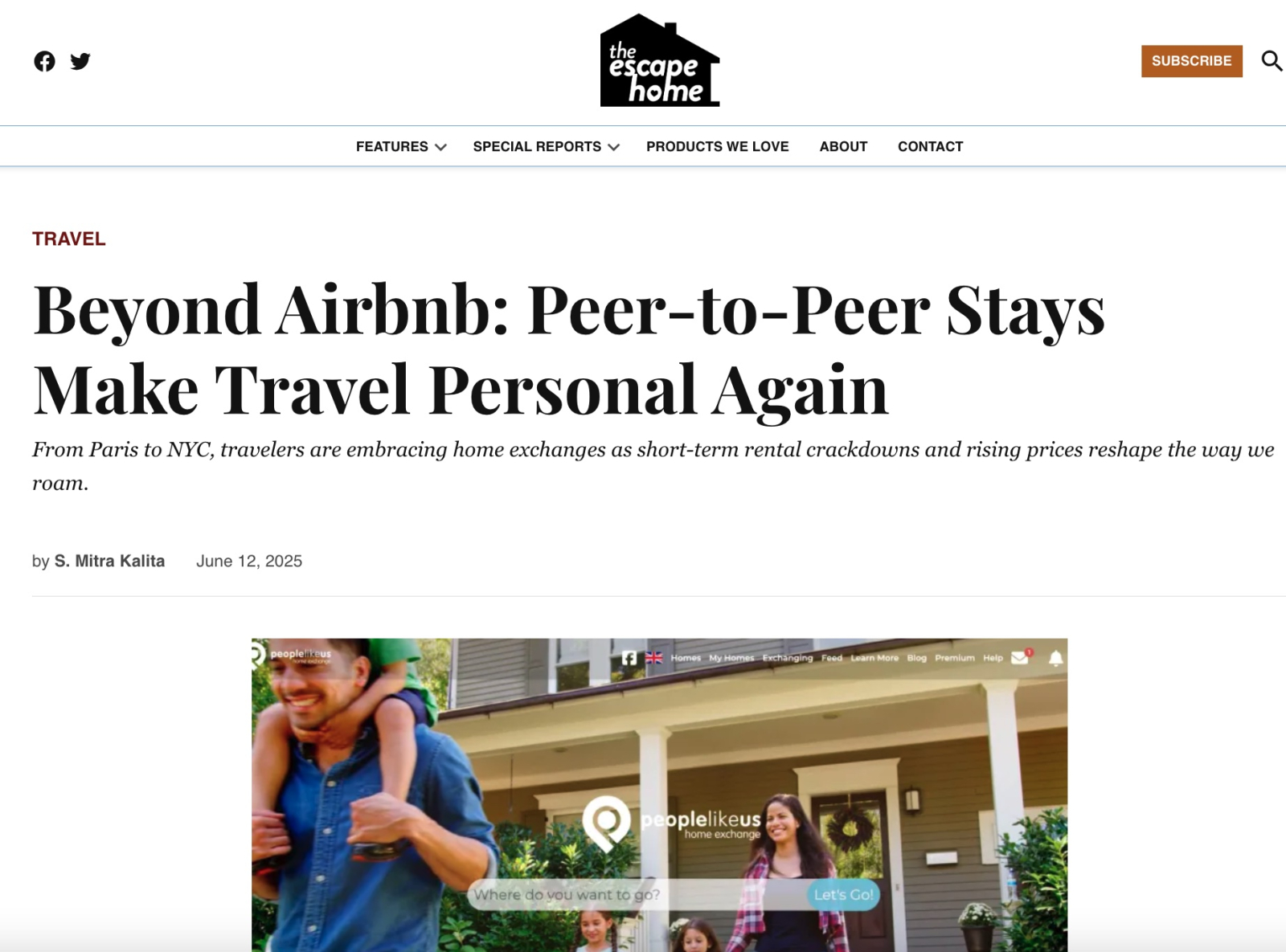
From Paris to NYC, travelers are embracing home exchanges as short-term rental crackdowns and rising prices reshape the way we roam. The Escape Home interviewed Drew Seitam, co-Founder with his wife Kathy of People Like Us, to understand the growth and ethos of home swap sites.
This interview by S. Mitra Kalita was published in The Escape Home, whose mission is to simplify what can be an overwhelming experience of owning a home while also offering travel inspiration.
S. Mitra Kalita: Where did the idea for People Like Us come from?
Drew Seitam: My wife, Kathy, and I have always loved to travel. In 2016, we were in Europe chatting about what life might look like once our son, Will, finished school. We dreamed of spending three to six months at a time overseas. We wanted to improve our language skills. Naturally, the conversation turned to how we could afford it, and we talked about home swapping to keep costs down.
We had the idea to create our community. We already knew people overseas and thought it would be fun to run our own network. And so, the idea for People Like Us was born.
SMK: How did it grow, and how do you manage the tension between “people like us” and a homey feeling and scale?
DS: I love this question because it’s been central to what we do from the start. Our community values trust, generosity, and respect—principles that have guided our growth from a handful of friends to a global network of over 11,000 members.
At the same time, we want to welcome more good people from around the world and increase exchange opportunities. So while we’re focused on growing PLU’s visibility and improving the onboarding process to make it easier and faster for new members, we also invest time and energy in nurturing our culture and serving current members to ensure a great experience.
For example, we’re the only platform offering a mentorship program where experienced members volunteer to help newcomers. We also maintain the industry’s strictest policy to keep only active listings, ensuring the community remains alive and responsive. There’s no magic formula, but we keep our core values front and center when making business decisions.
SMK: Can you talk about the latest idea for Plutos and what it entails, and how it came about?
DS: In 2019, we launched Globes to support non-reciprocal stays. A Globe is a token representing one home exchange, regardless of length. It’s about trust and the value of sharing your home with another member. The stay duration is decided between you and the host, whether it’s four nights, two weeks, or more.
But many members told us they were hesitant to offer a Globe for just a short trip. That’s why we introduced Plutos — a new kind of token made specifically for short stays of 1 to 3 nights. It’s perfect for weekend getaways, brief visits to friends or family, or just a quick change of scenery. And we’re already seeing stronger-than-expected adoption.
SMK: Any thoughts on where People Like Us fits into the history of peer-to-peer real estate platforms such as Airbnb, Couchsurfing, HomeExchange, etc?
DS: While we share some common ground with those platforms, like being part of the broader sharing economy and promoting peer-to-peer accommodation, People Like Us stands apart with a unique value proposition.
There’s no transactional element between members. While we do charge a yearly membership fee, there are no points tied to the size, market value, or amenities of a home. We believe every member, whether they have a condo, a cottage, or a luxury villa, should have the same opportunity to exchange.
Our members love this approach because it gives them the freedom to form connections with exchange partners based on rapport, not transaction. At its core, PLU isn’t about real estate. It’s about people.
SMK: For NYC, where Airbnb has been banned and faces challenges, is an idea like this emerging as an alternative to pricey hotels for people who still want to travel affordably?
DS: Absolutely. We have quite a few members who used to rent their homes on Airbnb but can’t anymore — or only to a limited extent. Home swapping is a great alternative for both travelers and local communities.
For travelers, it’s an affordable and enriching way to explore while forming meaningful connections. For local communities, it ensures that homes are only occupied by guests when the main residents are away — by nature, that’s a limited timeframe. You don’t home swap for profit, so the risks of overtourism and neighbourhood disruption are non-existent.
SMK: What are the benefits of home exchange beyond price?
DS: Our members could probably write a book about this! What really stands out is the human quality of the experience. Exchange partners often become friends. They might get invited to a barbecue by neighbours. We have informal members’ meetups happening all over the world, year-round — locals and travelers connecting in ways they never expected. Kathy and I attend these whenever we can, but it’s always heart-warming to see our members meet each other, wherever and whenever it happens.
For many, home exchange is more than a budget-friendly option — it’s a lifestyle. It’s especially well-suited for digital nomads, retirees and others who have the flexibility for longer or more frequent travel. These members often keep their calendars open for unexpected opportunities and end up visiting places they might never have considered. It’s a gateway to a world of spontaneous adventure.
Introducing Saved Searches & Default Filters
NextThe Year Ahead: How PLU Members Are Choosing to Travel
Comments (0)
Log in to join the conversation.