
 Language
  Europe
 United States
 Canada
 Australia
 France
 Spain
Spain
 The Netherlands
 New Zealand
 Italy
Italy
 Denmark
 Germany
 Sweden
 Mexico
 Português
Send Enquiry
Premium
#49931


Loading...
Premium
#49931
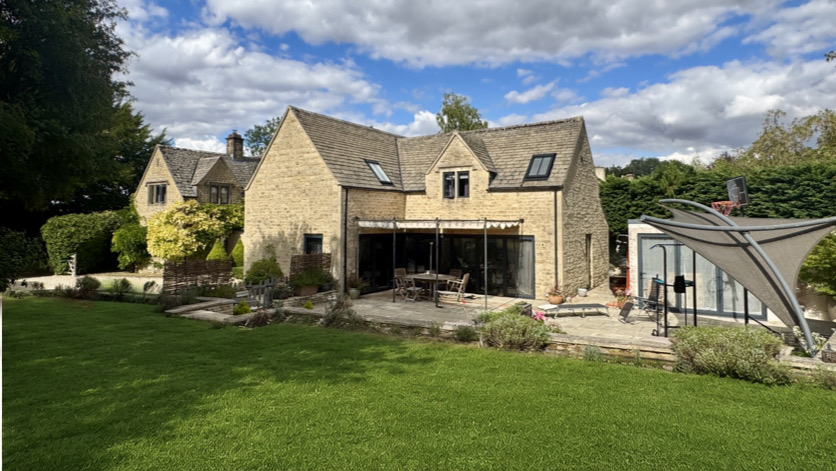
Beautiful, spacious, Cotswold stone 5 bedroom home in a pretty Cotswold village near Cheltenham
House • Dowdeswell United Kingdom
Exchange types accepted
Statistics
Listed February 2026
Views 972
General Overview
Our home is in a beautiful location in the Cotswolds area of outstanding natural beauty with all the outdoor activities it offers - and fantastic pubs! - while also being in close proximity to Cheltenham, a lovely Georgian spa town with great restaurants, shopping, theatre, culture festivals, and, of course, home to the famous Cheltenham races.
The house itself is on the edge of a small, pretty Cotswolds village, next to fields and a small private wood, on a no-through road. It is spacious and modern featuring a large open plan living, dining and living area with bifolds opening out onto a large terrace area and garden. There is a second living room with log burner and pool table.
One can go for country walks directly from the house or go and explore the quaint Cotswold villages and pubs in the area. Or pop into Cheltenham for some culture and fine dining or visit Oxford with its spires and stunning university buildings. London is also a train ride away!
The Cotswolds is one of England’s most picturesque regions—famous for rolling countryside, honey-coloured stone villages, historic towns, and relaxed rural charm. It’s a designated Area of Outstanding Natural Beauty (AONB), making it especially appealing for walking, sightseeing, and peaceful getaways.
The Cotswolds is famous for postcard-perfect villages built from golden limestone. Popular ones include:
• Bibury – Often called the prettiest village in England (30 mins drive)
• Bourton-on-the-Water – Known as the “Venice of the Cotswolds” (20 mins drive)
• Castle Combe – Extremely well-preserved medieval village (1 hr drive)
• Stow-on-the-Wold – Historic market town with antique shops (25 mins drive)
• Rolling hills, farmland, and scenic trails everywhere.
• The Cotswold Way is a famous 102-mile walking route.
• Ideal for hiking, cycling, photography, and nature lovers.
Many towns date back hundreds of years and were made wealthy by the medieval wool trade.
Examples:
• Cirencester – Largest town, Roman roots (30 mins drive)
• Chipping Campden – Classic Cotswold architecture (40 mins drive)
• Burford – Charming high street and historic buildings (30 mins drive)
The whole area is steeped in history, with plenty of Roman burial grounds and ancient ruins. Sudeley Castle
• Traditional English pubs with fireplaces and local ales
• Afternoon tea, farm shops, and cosy countryside hotels
The Cotswolds has a rich history stretching back thousands of years. Its landscape, towns, and buildings reflect layers of British history—from prehistoric settlers to wealthy medieval wool merchants and beyond. Here’s a clear historical overview by era:
Prehistoric and Ancient Times (before 43 AD)
People lived in the Cotswolds long before written history.
• Burial chambers called long barrows were built over 5,000 years ago.
• One of the most famous is Belas Knap, a stone burial mound from around 3000 BC. (15 mins drive and a lovely walk)
• Early farmers chose the area because of its fertile soil and elevated position.
These remains show the Cotswolds has been inhabited since the Neolithic period.
Roman Period (43–410 AD)
The Romans had a major influence on the region after invading Britain.
• They built roads, farms, and villas across the area.
• The town of Cirencester (called Corinium Dobunnorum by the Romans) became the second-largest Roman city in Britain, after London.
• Roman villas found in the countryside show the area was wealthy and agriculturally productive. Chedworth Roman Villa is 20 mins drive)
Roman influence helped establish the region as an important rural centre.
Anglo-Saxon and Medieval Period (410–1500)
This is when the Cotswolds truly became prosperous.
The Wool Trade Boom
• The Cotswolds became one of Europe’s most important wool-producing regions.
• Sheep thrived on the limestone grasslands.
• Wool was exported across Europe, especially to Flemish weavers.
This made local merchants extremely rich.
You can still see their wealth today in:
• Large churches nicknamed “wool churches”
• Elegant stone houses and market towns
• Historic market squares like in Stow-on-the-Wold (25 mins drive)
Many of the villages look similar today because they were built during this wealthy medieval period.
Tudor and Early Modern Period (1500–1700)
The wool trade gradually declined, but the towns remained important.
• Farming continued to dominate the economy.
• Manor houses and country estates were built.
• Many buildings from this era survive almost unchanged.
Because the region never industrialised heavily, its historic appearance was preserved.
Today, the Cotswolds is known as one of the best-preserved historic rural landscapes in England.
Overall Vibe
• Relaxed, scenic, historic, and very “quintessentially English”
• Ideal for slow travel - walks and pubs rather than fast sightseeing
When visiting, you’re seeing layers of history everywhere:
• Prehistoric burial sites
• Roman towns and roads
• Medieval churches and market squares
• Tudor houses
• Traditional farms still in use
Many villages look remarkably similar to how they did 300–500 years ago
The Space
The house is detached, not overlooked, facing fields and valleys. It enjoys a south-west facing aspect, with the sun coming around the front all day. There is a large patio terrace with dining table and chairs, BBQ, seating area, shade sail and fire pit. From here, steps lead up to a large garden with mature trees and flower beds. There is a football net and other garden games available!
Opposite the house, just off the lane, is a small private wood, with little paths and a bench to enjoy fabulous sunsets and views across the valley towards Cheltenham.
The ground floor of the house comprises an entrance hall and hallway, large open plan living/ dining/ kitchen area with large TV, table football and bifold doors that open onto the terrace and garden. There is a utility room with washer/ dryer and airers, a downstairs toilet and a second living room with pool table, TV, armchairs and sofas.
The first floor comprises one large bedroom with super-king size bed and garden views, a study/ bedroom with double bed and valley views, a shower and toilet room, a large family bathroom with bath, large shower and toilet, a large bedroom with king size bed, double futon and single kids bed, a further bedroom with single bed, and finally a vaulted master bedroom with super-king bed and en-suite shower/ toilet, with garden views.
There is a large private drive that can fit several cars, plus a smaller drive behind the house if needed. There is a double garage however we do not tend to use it for cars - more for storage! It could be used if needed.
There is also a studio outbuilding which we tend to use for storage.
Guest Access
Step-free ground floor, all level, directly from drive, and stairs to first floor.
Notes
Best Time to Visit
• Spring (Apr–Jun): Flowers, lambs, mild weather
• Summer (Jul–Aug): Warmest and liveliest
• Autumn (Sep–Oct): Beautiful colours, fewer crowds
• Winter: Quiet, cosy pub atmosphere, snow sometimes.
Features
Fridge
WiFi
Bed sheets
Oven
Towels
Washer
TV
Heating
Hair dryer
Microwave
Iron
Dishwasher
Smoke alarms
Workspace
Clothes dryer
Coffee machine
High Speed Internet
Garden / yard
Bathtub

Deck / patio / courtyard / terrace
BBQ
First aid kit
Fire extinguisher

Fireplace


Wheelchair accessible
Home cinema


Piano
Travel Styles
Weekend
Adventure
Family
Romantic
Sport and leisure
Foodie
Relaxing
Luxury
Village
Culture
Hiking
Cycling
Golf
Accessibility
House Rules
Unsuitable for infants under 2
Suitable for children ages 2-12
Pets not allowed
No smoking
Allergens
Cat free
Smoke free
Fragrance free
Low allergen
Dates of Availability
This member has chosen to hide this section from Non-Premium members.
Neighbourhood
Our village of Dowdeswell is a small, charming. friendly rural parish in Gloucestershire, near Cheltenham.
• It has medieval origins and was mentioned in the Domesday Book (1086).
• Historically an agricultural community, it’s now known for countryside walks and heritage.
It has its own village hall and large communal field with small, young arboretum planted by the villagers, with benches.
There are two golf courses, a clay pigeon shooting range, riding stables, lovely picturesque ‘grown-up’ pub/inn, and a very cool festival-vibe hang-out with amazing street food, bar, music, fire pits and on-site brewed local cider, all in the immediate area.
Getting to my home
Train from London Paddington Station to towns like Kingham (about 90 minutes)
• Driving gives the most flexibility to explore villages and towns and the general region.
Nearest airport
Bristol and Birmingham airports are around 1hr away and London Heathrow is 1hr 40.
Getting Around
A car is handy to get to Cheltenham and further afield. There are a couple of small shops including a post office in the adjacent village, Andoversford. Larger supermarkets are about 20 mins drive. There is a bus that goes from Andoversford into Cheltenham and to Bourton-on-the-water, Stow-on-the-Wold, Morton-in-the-Marsh and Burford. There are buses and coaches that go from Cheltenham to many places, and Cheltenham has a train station.
Map of Approximate Location
This member has chosen to hide this section from Non-Premium members.
Feedback
This member has chosen to hide this section from Non-Premium members.
People Like Us is the world's most trusted home exchange community. We believe in sharing, trust, generosity, respect, communication, equality, cooperation, honesty, hospitality, friendship, flexibility and adventure. We take pride in our homes and we care about the environment in which we live: our village, city, country and our planet. We care about the ethos of home exchange and we do it because we love the experience and the friendships that it generates.
Locations


© 2017 - 2026 People Like Us Home Exchange Pty Ltd